

PUBTRAILS
Comparing drinking and pubs in England with Scotalnd
In 1971 I moved my underage drinking from Scotland to Birmingham and discovered the many differences between drinking in Scotland and England. Some of them still exist today although the differences are less pronounced due to movement of people, common ownership of breweries and pubs, TV and film, etc . In fact, many are not particularly noticeable in a modern context but some were in 1971 and more were earlier in the 20th Century.
That there were differences was no surprise since the Parliaments did not combine until the Act of Union in 1707 while brewing, drinking and places to drink in had been in existence long before that and had been having laws and restrictions and taxes placed on them. A lot of differences also come about because of social and cultural issues.

Admiral Benbow, Shrewsbury - not a style in Scotland
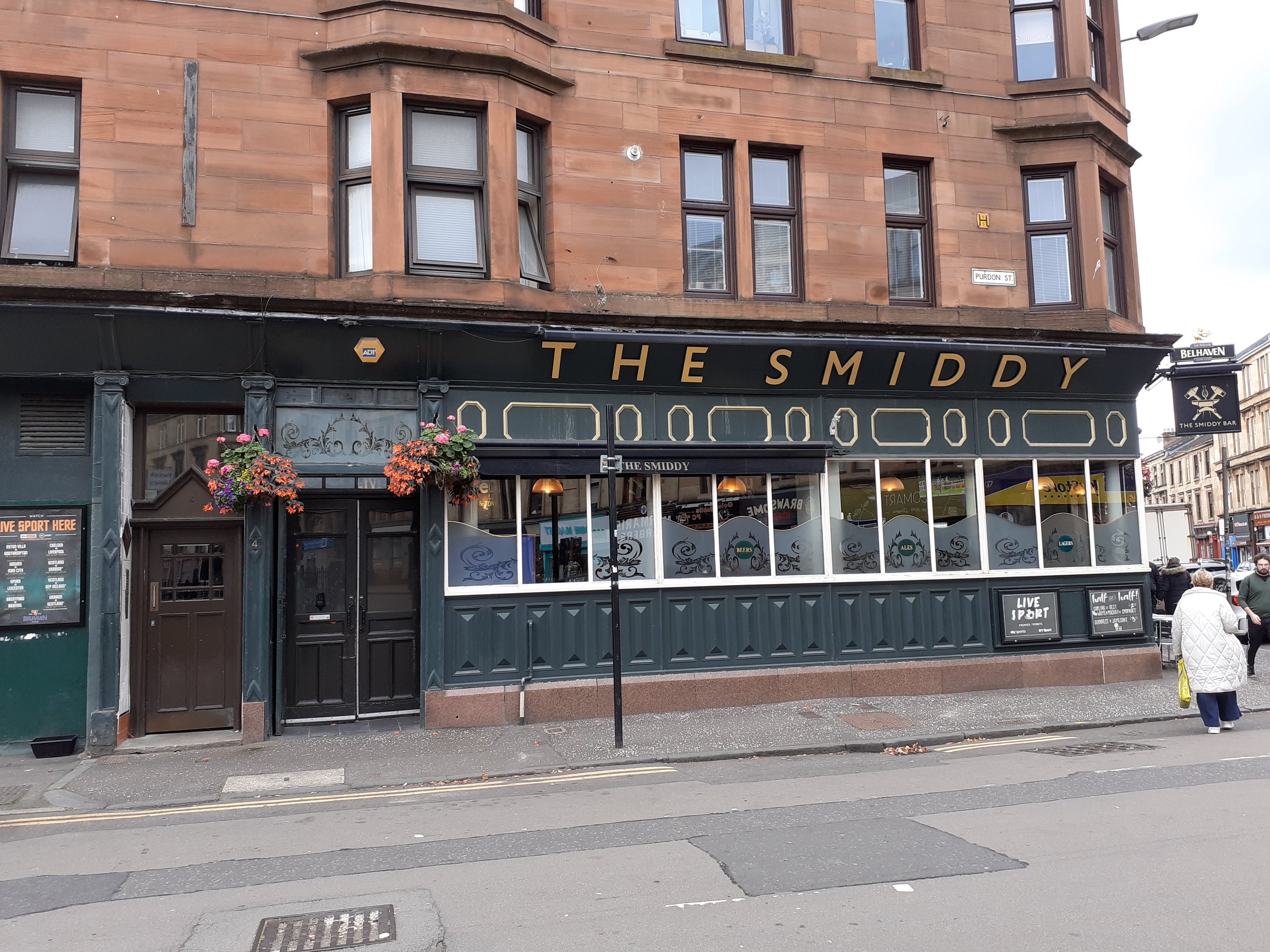
The Smiddy, Glasgow - typical ground floor of tenement corner pub
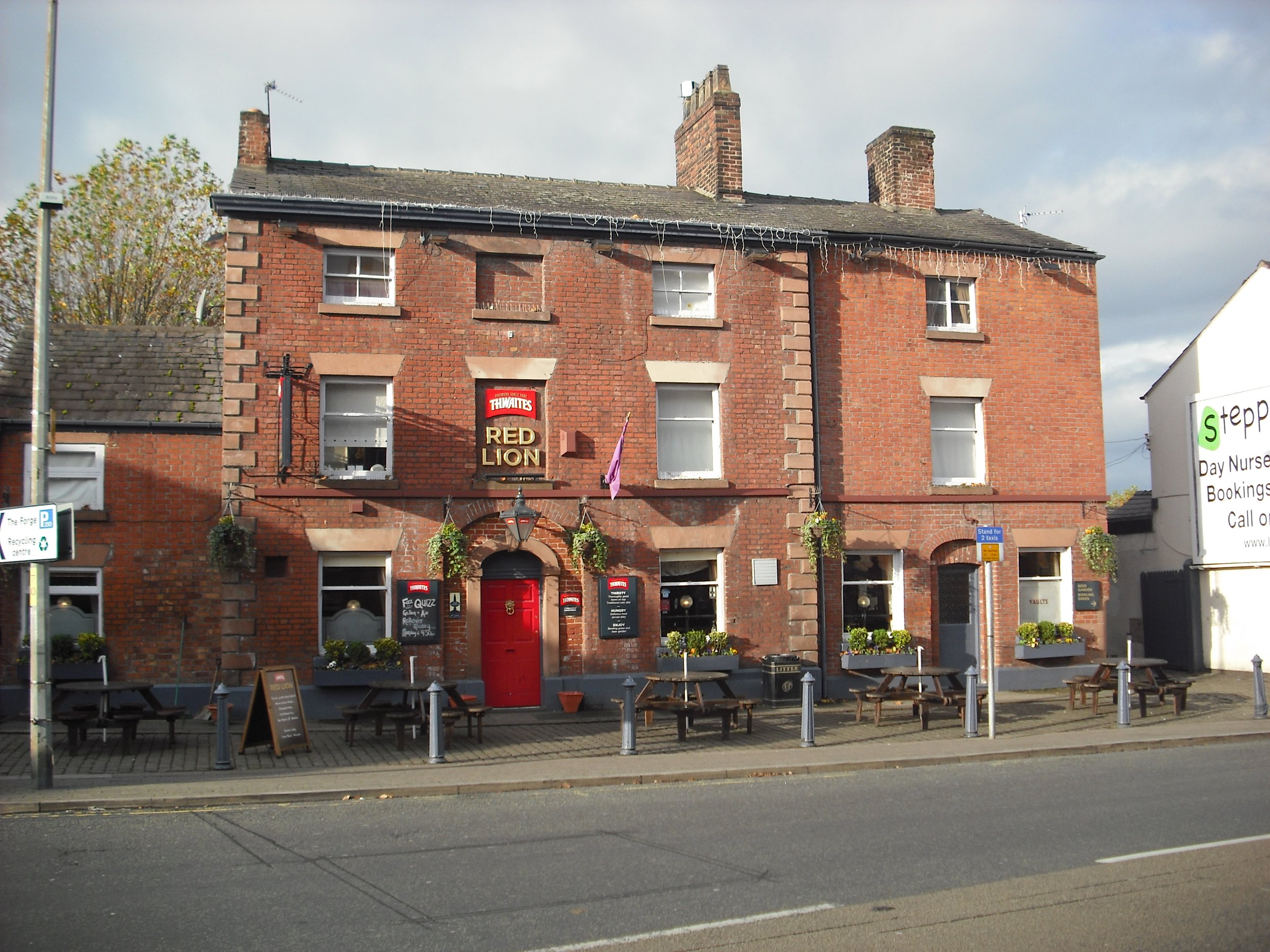
The Red Lion, Stockton Heath - with bowling green to rear (not something found in Scotland)
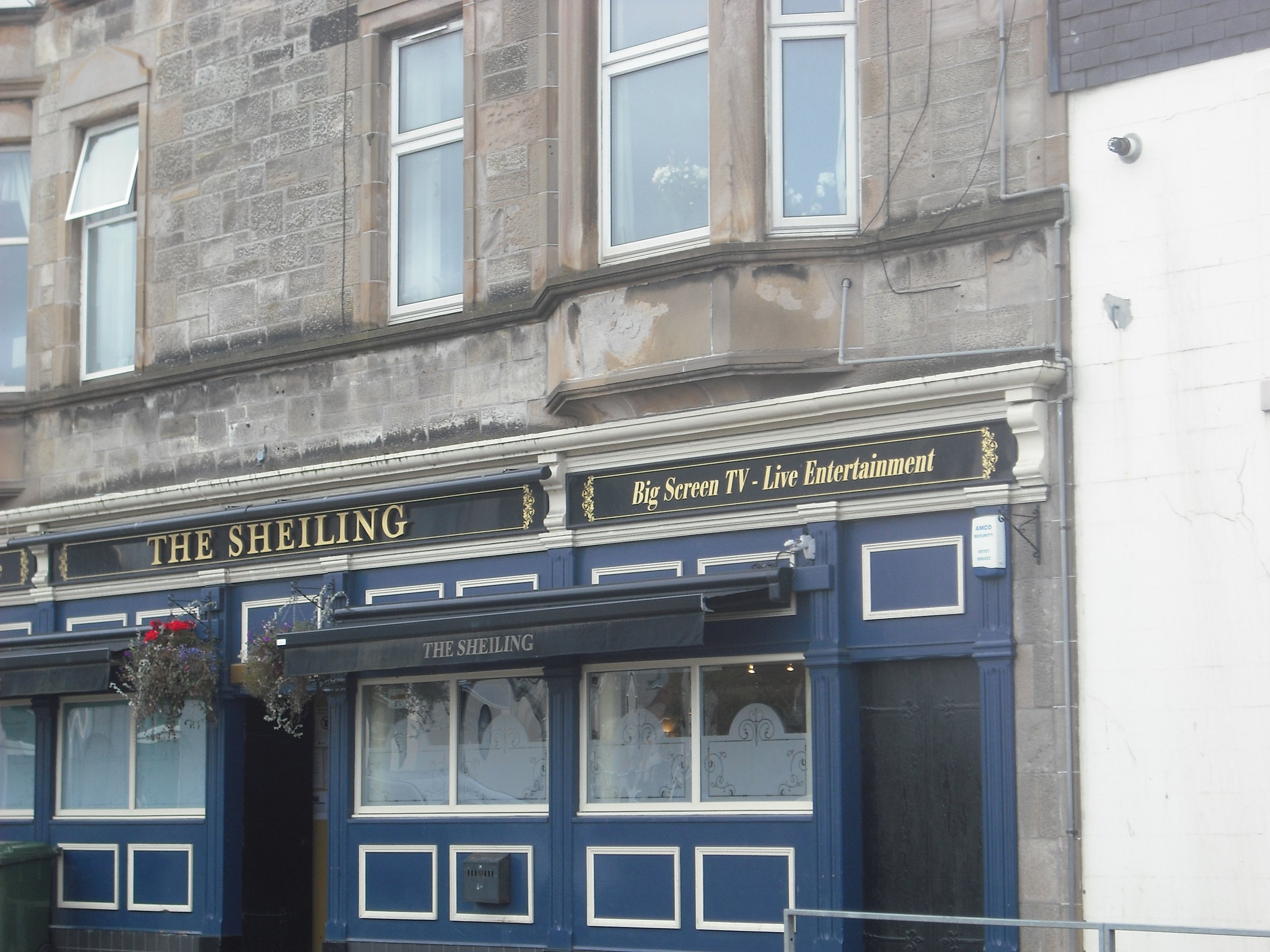
The Sheiling, Largs
Much of the information below has been gleamed from:
(1) People’s Palaces: Victorian and Edwardian Pubs of Scotland By Rudolph Kenna and Anthony Mooney, Pub Paul Harris, 1983
(2) A History of Drinking: The Scottish Pub since 1700 by Anthony Cooke, Edinburgh University Press, 2015
Plus help from
(3) Licensed to Sell, Geoff Brandwood, Andrew Davidson & Michael Slaughter, English Heritage, 2004
(4) Scotland’s True Heritage Pubs, ed Michael Slaughter, CAMRA.
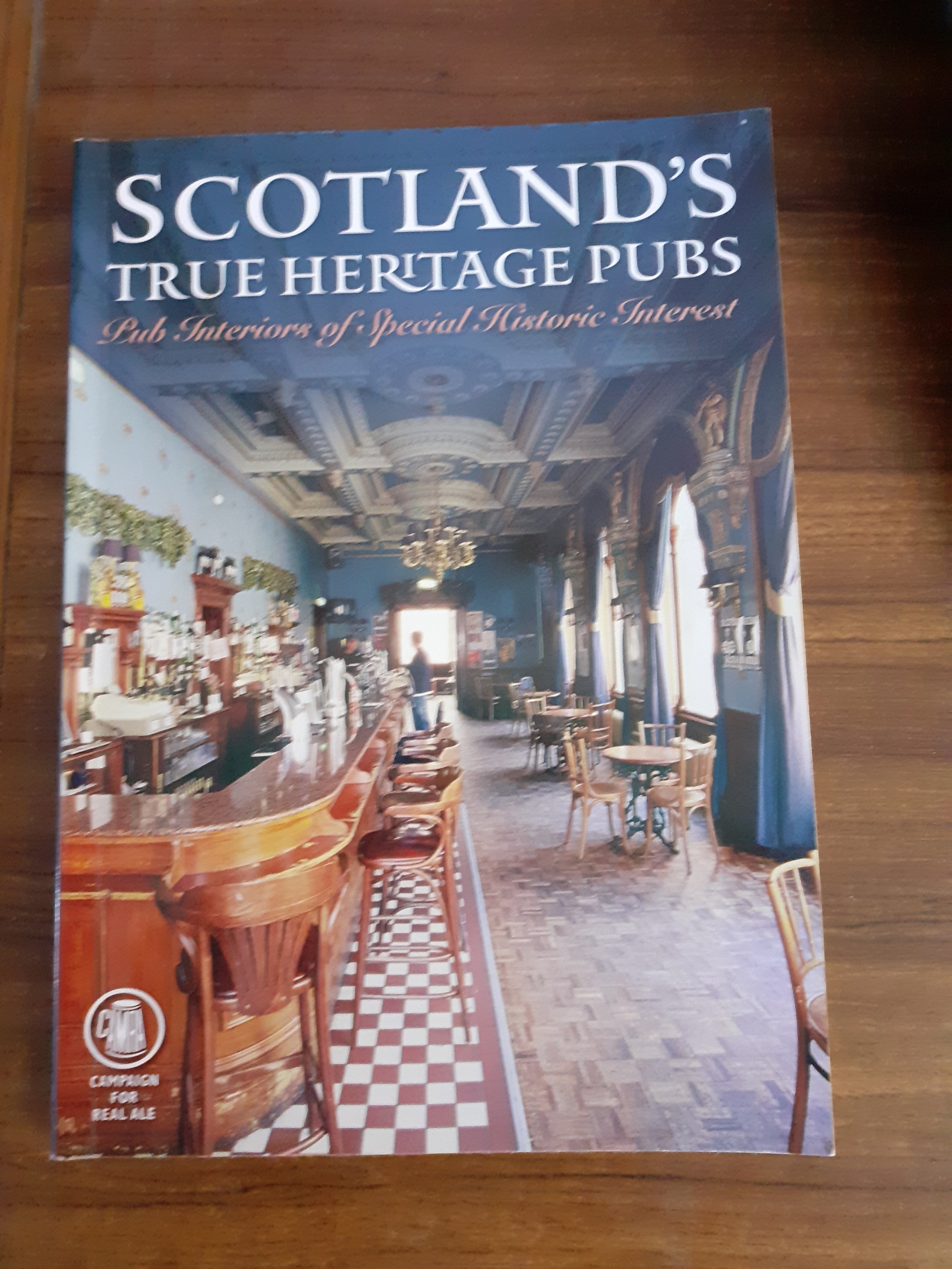
Scotland's True Heritage Pubs - ed Michael Slaughter

A History of Drinking: The Scottish Pub since 1700 - Anthony Cooke
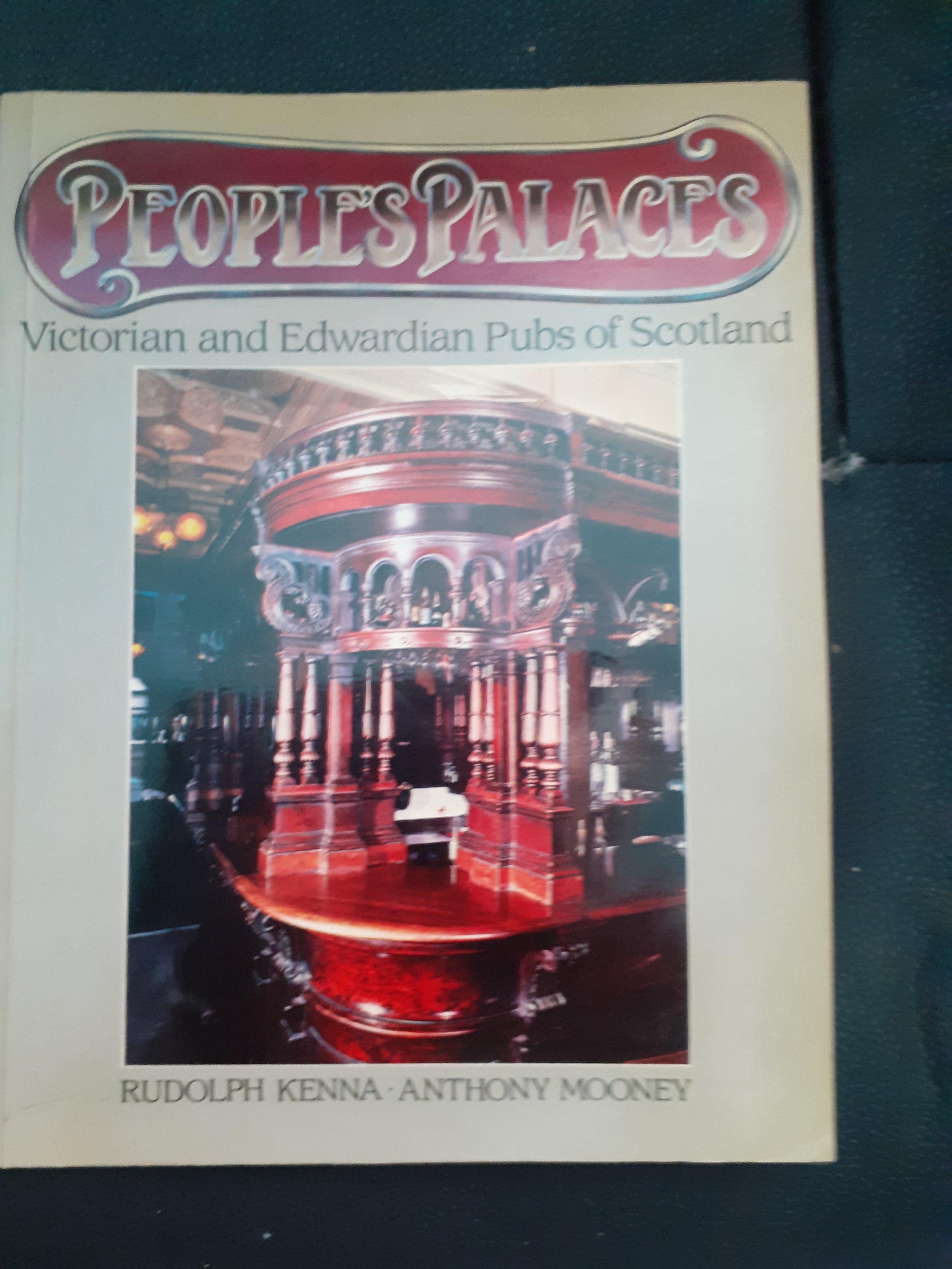
People’s Palaces: Victorian and Edwardian Pubs of Scotland By Rudolph Kenna and Anthony Mooney

Licensed to Sell, Geoff Brandwood, Andrew Davidson & Michael Slaughter
Differences to me were sometimes as obvious as different styles of beer and licensing hours, to the actual architecture and design of pubs, the dispensing of beer, tied houses and even the naming of drinking establishments. None of the differences caused confusion as to how or where to get a drink, however, they are interesting and, of course, generalisations.
Outlining the differences
1. Naming places - pub or bar?
2. Licensing hours in 1971- early closing and pubs not opened on Sundays
3. Architecture -styles of buildings and internal supervision
4. The Tie- Free trade in Scotland
5. Naming Beers -Heavy or Bitter
6. Dispensing Beers - handpump or water pressure
7. Taste
8. Open air drinking - Not designed for Scotland
9. Extending drinking hours 1976 - Scotland get extended opening before England
10. Smoking ban
11. Still fighting alcohol
12. A little History
a) Before the Union
b) 1700s
c) Late 18th and Early 19th Century
d) Temperance – Starts in Greenock
e) Victorian & Edwardian
f) Defence of the Realm
g) 1918-1945
h) 20th century - adding more controls
PLACES TO VISIT WITH PUBTRAILS
The towns and villages highlighted on this web site have a wide variety of pubs and beers in them. All of the places are great to visit, whether for a day or longer, and most have tourist attractions for all of the family.
There is a large variety of pubs throughout the different towns shown below. Some you may wish never to visit again but even discovering these can be interesting. There are pubs that you would not take your wife into. While some you could not take your girlfriend into. A few you would not take either into. However, most of the pubs are very pleasant.
HOME MAP of places visited
Alnwick Ambleside Anstruther Bakewell Bamburgh Barnard Castle Bath Berwick upon Tweed Birnam & Dunkeld Bourton on the Water Bowness on Windermere Bridge of Allan Chester Chichester Dunblane Dunoon Edinburgh Ely Fort William Glasgow Gourock Helensburgh Inverness Kelso Keswick Knaresbourgh Largs Linlithgow Lyme Regis Melrose Montrose Newton Stewart North Berwick Norwich Oban Pebbles Penzance Portree Pitlochry Quorn Richmond Rothesay St Andrews Seahouses Seend Shrewsbury Skipton Stirling Stratford-upon-Avon Stockton Heath Whitby Windemere Whitstable York
1. Naming
Scotland differed from England in the way drinking places were named and described. Brandwood, Davidson and Slaughter note in Licensed to Sell that, in Scotland, people usually went to a “bar” for a drink, whereas in England they went to a “pub” or “public house”; in England, the “bar” was more specifically the servery counter, as in “standing at the bar”. Over time, this distinction has weakened, and an English visitor would now understand an invitation to visit a bar in Glasgow.
Many bars in Scotland are historically called after the licensee, who was probably the owner, and/or have the word “bar” in the name.
The English terminology is more precise: the pub is the building, while the bar is the counter where customers are served. Because I often use both “bar” and “pub” to mean the building, phrases such as “the bar of the bar” become awkward; for clarity, I use “servery”, as recommended by Brandwood, Davidson and Slaughter, or simply “counter”.
This naming pattern reflected ownership as well as language. Fewer Scottish bars were brewery-owned than English pubs: even in 1969, when 86% of English pubs were owned by breweries, only 27% of Scottish premises were brewery-owned. Most were owned or rented as individual concerns, although early pub companies were beginning to emerge through businesses that controlled groups of pubs.
Scotland also appears to have had a persistent tendency to keep the sale and consumption of alcohol less visible. Drinking places were often located down closes, licensees were not allowed to live above their premises, evening closing hours were earlier than in England,windows were frosted or only high up and pubs were closed on Sundays.
Post Office Directories also show this difference. English directories often list pubs by name, while Scottish directories commonly list the owner or renter under the occupation “wine and spirit dealer”. In the 1890 Greenock directory, 137 premises sold drink, but only 37 had a bar or hotel name; the remainder were listed under Spirit Dealers.
Taken together, these patterns suggest that Scottish bars placed greater emphasis on drinking itself, especially the drinking of spirits, than on the broader social identity associated with English pubs.

Macsorley’s is a ground floor bar in a tenement block with other tenement blocks on either side. Named after the owner it has glass that cannot be seen through and a double door entrance. Originally no outside seating available in middle of city though now many pubs arrange tables on busy pavements.
Though it does have an apostrophe - this is often missing
2. Licensing hours
The most obvious difference between Scotland and England in 1971 was licensing hours, a contrast that shaped how, where, and when people drank until English opening hours eventually aligned more closely with Scotland’s in 1988.
In 1971, pubs in England could open on Sundays, while in Scotland Sunday drinking was largely restricted to hotels. Scottish bars had been closed on Sundays since 1853, although hotels could serve residents and “bona fide” travellers who had travelled at least three miles; England narrowly avoided similar restrictions in an 1881 vote.
The “bona fide” traveller rule was frequently stretched. Sunday travel for drink became common, particularly on Clyde steamers, where heavy drinking was associated with excursions; some accounts link this practice to the term “steaming” for drunkenness. The Gladstone Act of 1882 ended Sunday alcohol sales on passenger ships, but the broader problem of people travelling to distant hotels and drinking heavily continued until 1977.
Lord Guest’s Report Part 1 (1960) recommended Sunday opening for pubs, hotels, and licensed restaurants, but the government rejected that proposal. Instead, weekday opening was set at 11.00 am to 2.30 pm and 5.00 pm to 10.00 pm, while Sunday opening for hotels and clubs was limited to 12.30 pm to 2.30 pm and 6.30 pm to 10.00 pm; this remained the position until 1976.
Under the Licensing (Scotland) Act 1962, hotels were allowed to sell alcohol to the general, non-travelling public, although the belief that customers still had to be travellers persisted as an urban myth. In practice, many people still had to travel to reach an open hotel, and private members’ clubs could also open on Sundays, much to the frustration of publicans.
This pattern created policing difficulties because drinkers were drawn to establishments outside their local areas. Those venues became crowded, and some customers drank more than usual because the effort of travelling encouraged them to make the trip “worthwhile.”
The 1903 Act set evening closing at 10.00 pm, with ten minutes’ drinking-up time, while most English pubs closed at 11.00 pm. In Scotland about ten minutes before “last orders” was called drinkers would go up for a last round and probably order two rounds. These all had to be drunk in the twenty minutes left. This was more difficult than it sounds because everyone was doing it so it might be 9.59 before you were served giving only 11 minutes for two rounds and what had been left on the table when the last orders call went out.
Staff also faced pressure, including complaints about slow service and resistance when asking customers to leave. Some were paid only until 10.00 pm, despite needing additional time to clear tables, wash glasses, and close the premises properly.
As a result, streets outside pubs could become crowded at 10.00 pm as customers left at the same time. Where several pubs stood close together, large groups of people, many affected by last-minute drinking, gathered in less controlled surroundings where disputes could escalate.
A similar, though generally less intense, rush for final drinks occurred in England at 11.00 pm.
Less well known, and less common, was the potentially more disruptive “five o’clock swill” in heavy industrial areas, particularly near shipyards.
Bars near large industrial workplaces prepared for a rapid influx of workers finishing at 5.00 pm, often by pre-pouring trays of half-pints, pints, whisky, and fortified wines such as “dark” or “clear.” By the 1970s, these fortified wines were often South African brands such as Eldorado or Four Crown; they were still sold in some pubs in the 1980s, although the five o’clock swill had declined as heavy industries closed.

Richmond, Yorkshire has a large square where currently (there have been more) six pubs would empty at the same time plus several up roads off of the square if closing times were exactly the same.
Australia provides a useful example of how restrictive closing times can concentrate drinking and related disorder. When pubs were required to close at 6pm, many workers finished at 5pm and had only one hour to drink, contributing to the “six o’clock swill”: crowded bars, rushed service, heavy spillage, alcohol-related illness, and rapid intoxication before closing. Of course people getting very drunk in an hour and the associated behaviour did fuel temperance calls for keeping bars closed. “If they could get this drunk in an hour …..”
In each country, opponents of extended opening hours could point to visible disorder as evidence for their position, but that interpretation often overlooked the effect of single closing times, afternoon closures, and compressed drinking periods. Extended closing can reduce this pressure by allowing customers to leave gradually as the evening progresses, rather than all exiting at once.
Some towns in Scotland adopted similar controls when allowing extended opening. Inverclyde, whose largest town is Greenock, introduced a curfew on movement between pubs, which created a fixed point at which many people gathered in the town centre while attempting to change venues; over time, this curfew shifted from 11pm to 11.30pm and then to midnight.
The curfew also encouraged customers to remain in one venue, because leaving meant they could not later choose another. On 18 September 2023, Inverclyde removed the curfew after police acknowledged that there was no evidence it had produced a positive impact, raising the question of whether sufficient evidence had supported the policy since its introduction in 1994.
During the Covid reopening period, authorities again required bars to close at the same time. This approach concentrated intoxicated customers outside venues simultaneously, increasing pressure on taxis and bus services while stretching police resources across multiple pubs and potential house parties.

The Bow Bar, Edinburgh - like a shop front
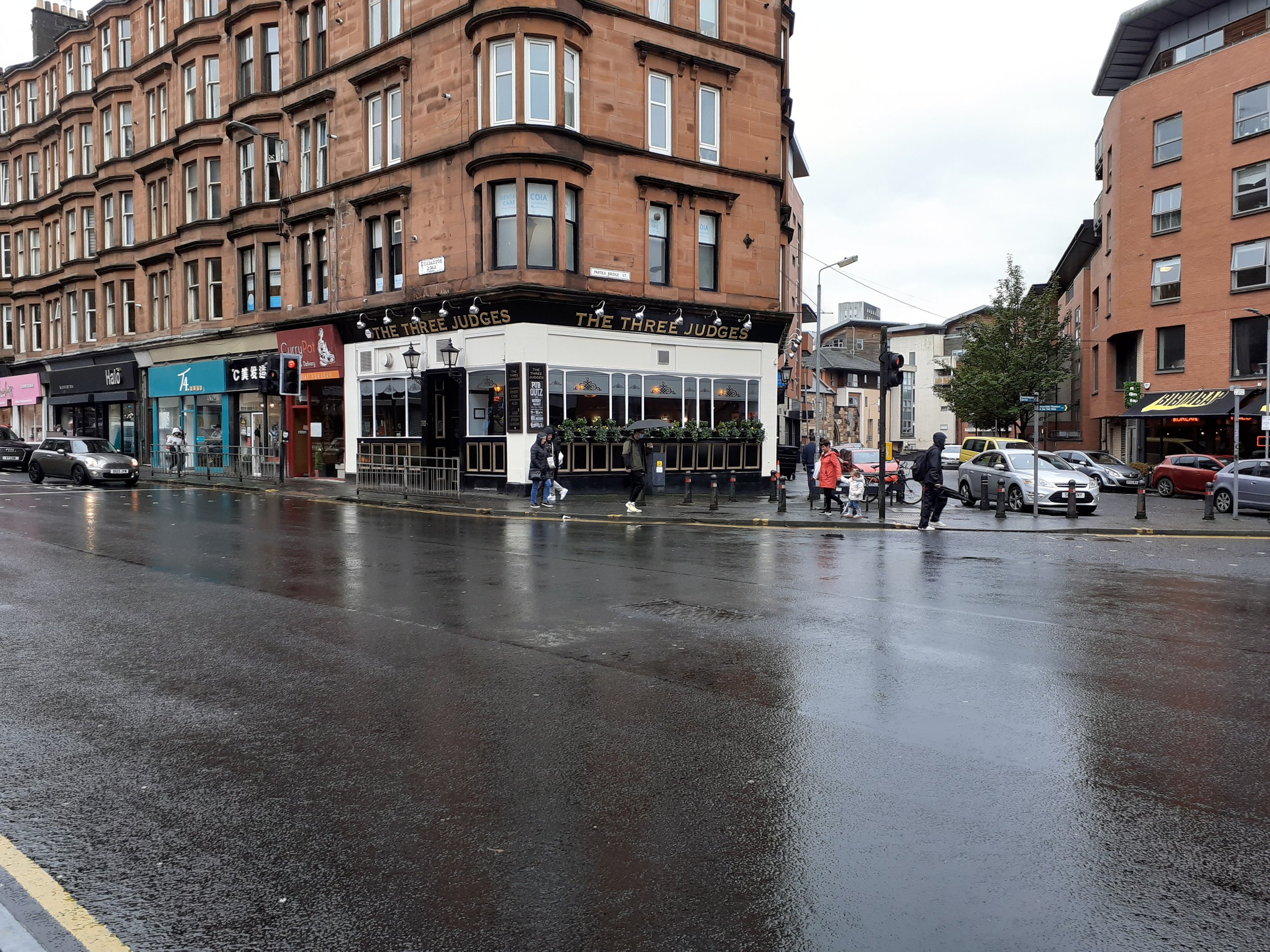
The Three Judges, Glasgow - tenement flats above

The Jolly Judge, Edinburgh - down a close
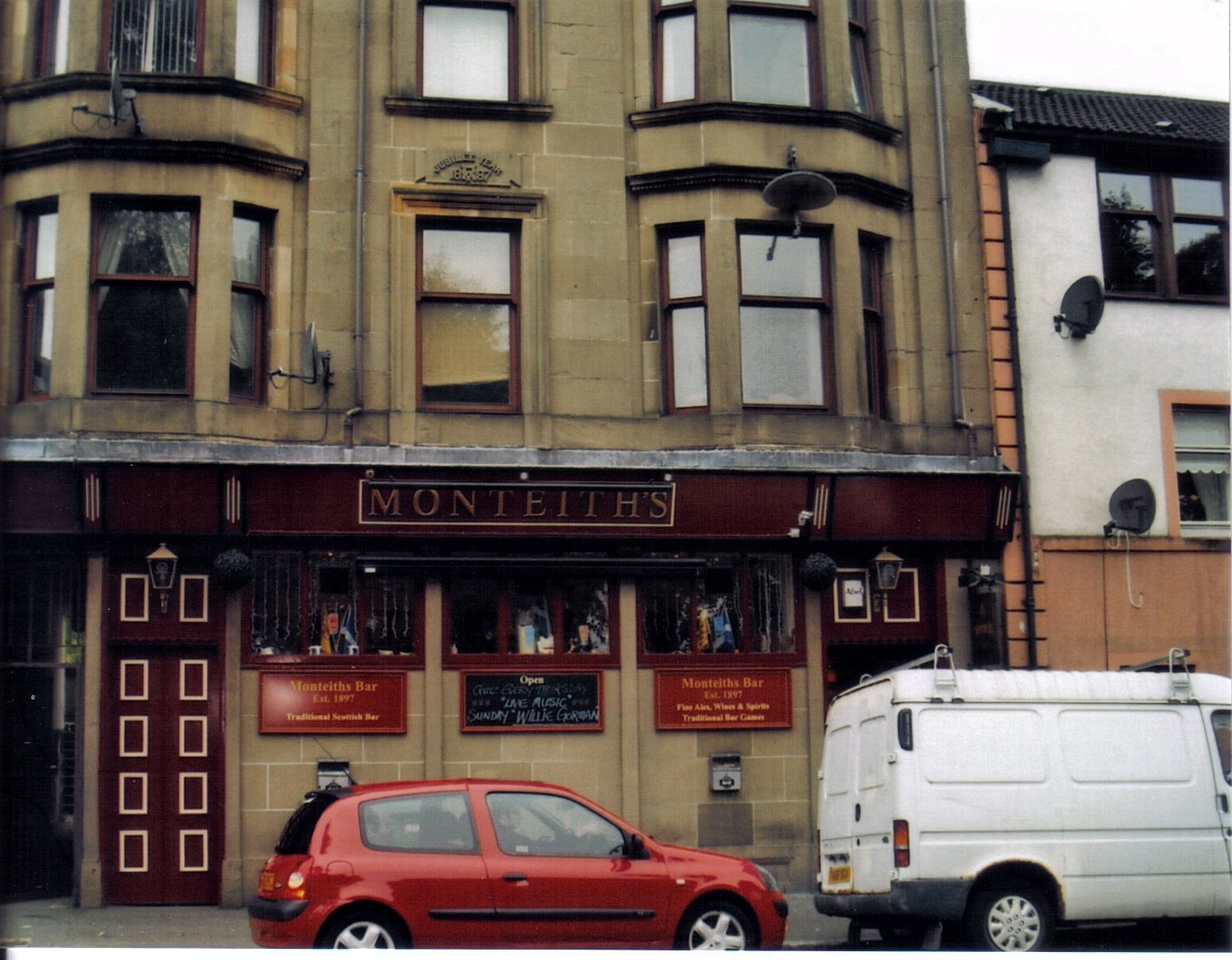
Montieth's, Gourock - flats above and high windows
3. Architecture
Few urban bars from before the late 19th century have survived in Scotland. The years from 1850 to 1910 were especially important for the building and redesigning of bars, as new licensing laws emerged alongside the temperance movement, Sunday restrictions, and growing concern about drunkenness and associated crime.
One of the most visible differences was architectural. In Scotland’s cities and towns, the most common housing structures were tenements: three- or four-storey buildings, usually built side by side, with six to eight flats used as homes. These apartments ranged from small two-room dwellings to larger flats with two public rooms, four bedrooms, and possibly a butler’s pantry. In the centres of towns and cities, the ground floor of these buildings sometimes contained shops rather than homes, such as butchers, grocers, sweet shops, and newsagents. Occasionally, one of these shops was a small bar. Calling a bar a shop, or a "wine and spirit merchant", helped disguise the fact that alcohol was being drunk on the premises. Scotland went to considerable lengths to hide public drinking.
This tenement structure meant that Scottish bars usually did not have living accommodation for the publican above the premises. Publicans living above bars were actively discouraged, partly to prevent people from remaining in the bar after closing time. Instead, an ordinary tenant might live above the bar, which cannot have made for the quietest flat in the building. Scottish bars typically had a long counter with plenty of standing room, since seats encouraged people to settle and drink for longer. They also often had several semi-private rooms off the main area. Because these small rooms could not always be seen from the bar counter, behaviour inside them was harder to supervise.

The Mulberry Tree, Stockton Heath
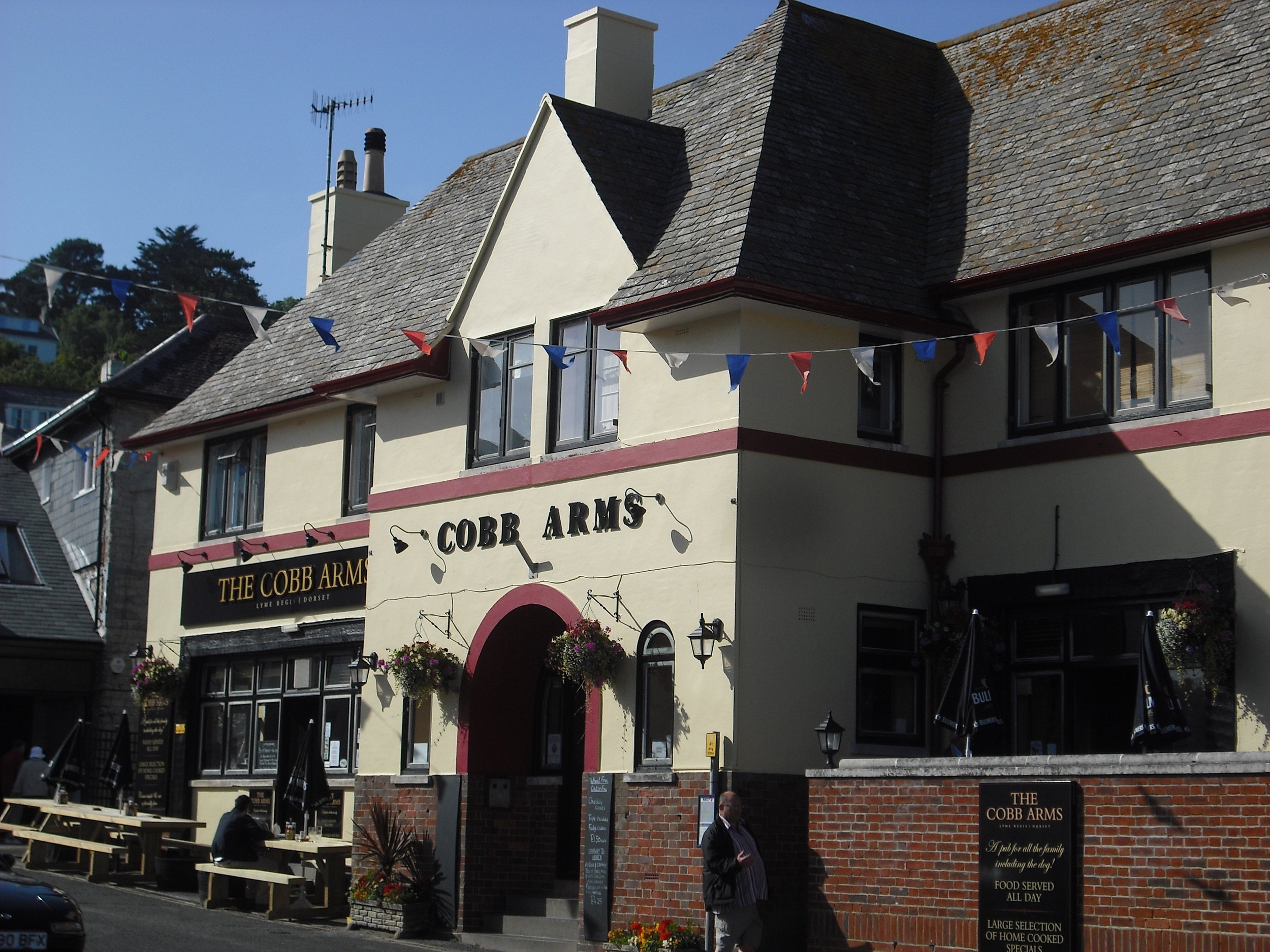
The Cobb Arms, Lyme Regis

The Unicorn, Ambleside
In England, public houses were usually purpose-built, often on a large scale, with the landlord living on the premises. Although many had separate drinking rooms, these were typically served from the same counter.
Traditionally, Scottish pubs had very little window space. Where windows existed, they were often positioned high on the frontage and darkened by curtains, signage, or advertising on the glass. This left interiors short of natural light, especially in bars with a narrow frontage and a long interior. The intention was to prevent passers-by from seeing drunken behaviour inside, or from being tempted to enter; however, it also concealed any illegal activity from outside view.
At the start of the twentieth century, Liverpool had reduced drunkenness through regulation of pub interiors and enforcement of opening hours. Magistrates from Glasgow in 1902, and from Dundee, visited Liverpool and were impressed that they could see into pubs through windows that were neither curtained nor obscured; in many cases, looking through the door gave a view of most of the interior. Scottish pubs often had a small porch and therefore two sets of doors, which interfered with supervision. Liverpool pubs also lacked semi-private compartments. Because most Liverpool pubs were brewery-owned, they were easier to regulate: breweries had a vested interest in good behaviour, and magistrates could pressure one brewery by scrutinising several of its premises. Liverpool pubs were also generally located on main thoroughfares rather than in back closes. Bars in closes may have kept temptation out of sight, but they also concealed misbehaviour. After the visit, Dundee magistrates recommended removing bars from alleys and closes and relocating them to thoroughfares where they could be supervised more effectively.
The lessons from Liverpool would likely have unsettled Scottish licensing authorities, whose approach appeared to prioritise removing any sense of enjoyment from bars and keeping them hidden from public view to avoid tempting others.
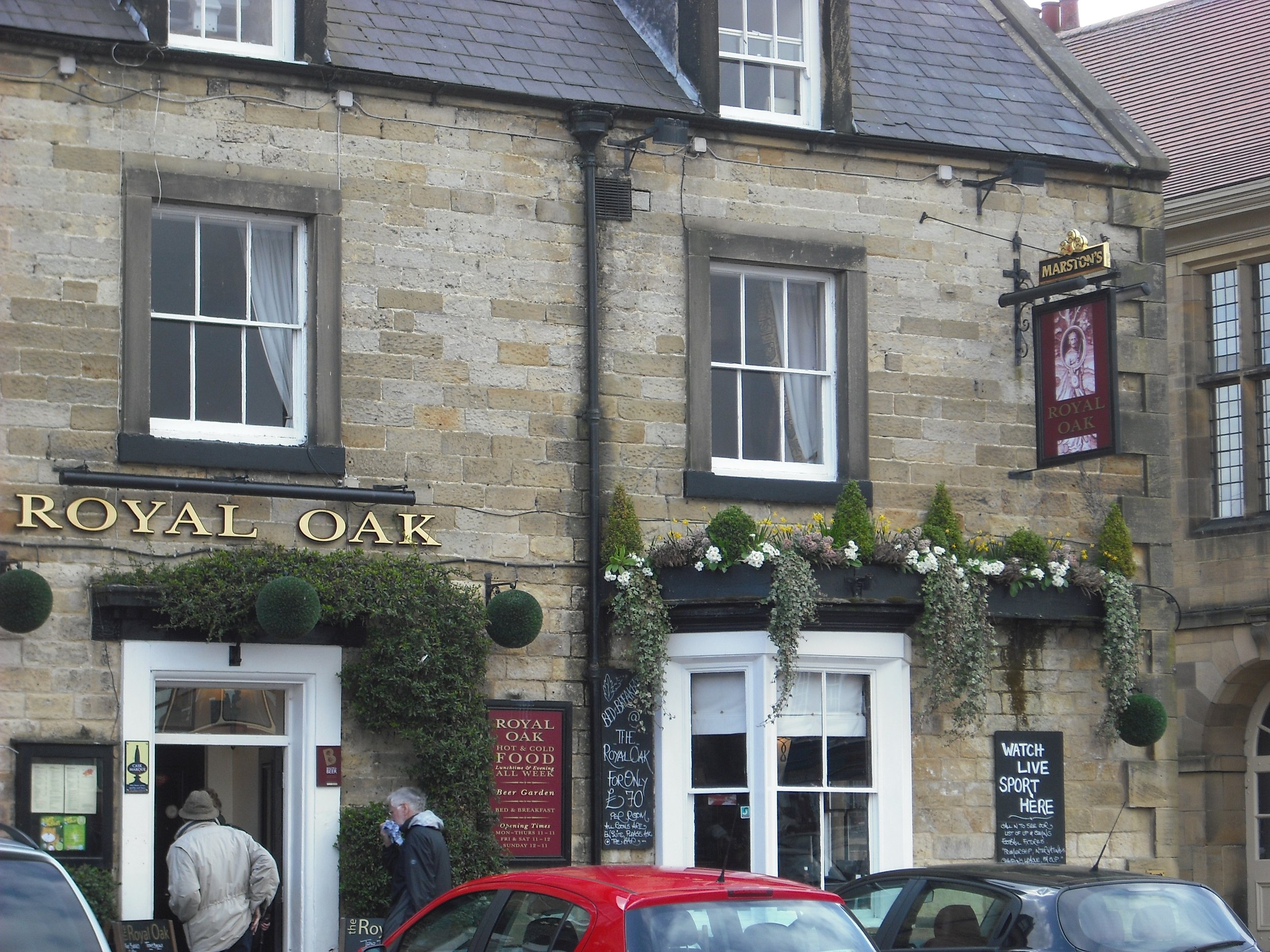
The Royal Oak - not a pub structure seen in Scotland's towns
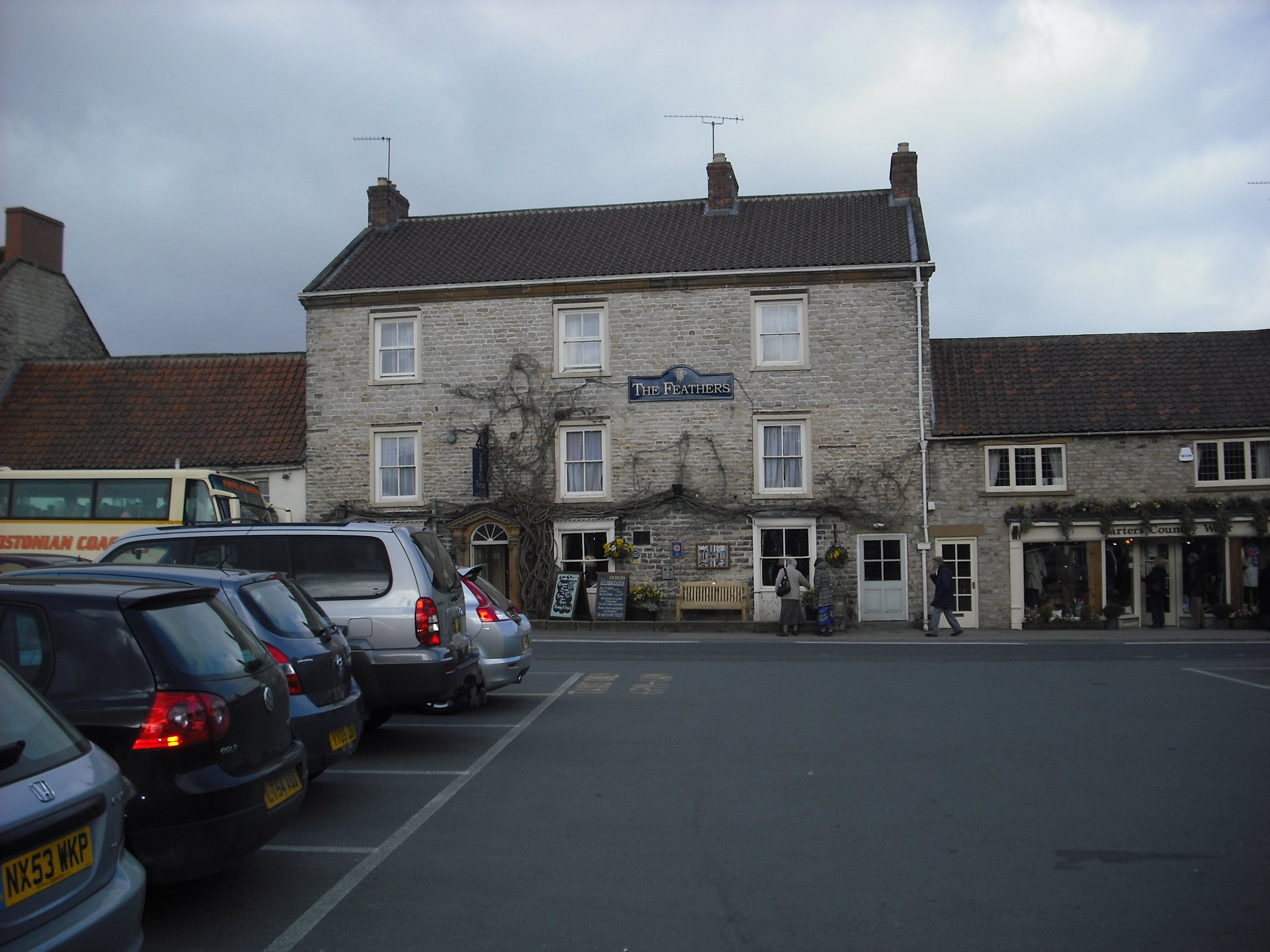
The Feathers - not a pub structure seen in Scotland's towns

The Shire Horse - not a pub structure seen in Scotland's towns
1903 Licensing Scotland Act
This note summarises the main effects of the 1903 Licensing (Scotland) Act and contrasts Scottish public houses with their late Victorian English counterparts.
· The Act made it an offence to supply alcohol to children under 16, raising the previous threshold of 14.
· Licensing authorities could set closing time at 10 p.m.; by 1909, Dunoon was the only town where bars remained open after that hour.
· It became an offence to be drunk and incapable in any place to which the public had access, including bars.
· Licensing courts were required in every town with a population of 7,000 or more, and improvements to premises could be made a condition for licence renewal. (2)
The typical urban English public house of the late Victorian period—often several storeys high, with socially differentiated bars and a resident landlord—had no direct equivalent in Scotland. Scottish licensing authorities generally did not encourage publicans to live on the premises. Some English public houses had multiple partitions and screens, allowing a single serving counter to supply several smaller rooms. For example, the Prospect Inn in Minster-in-Thanet, Kent, had a horseshoe bar serving a games room, a public bar, a small public bar, a saloon bar, and a small saloon bar; this arrangement enabled bar staff to observe activity across the rooms while also accommodating slightly different clienteles in each area.
Scottish bars were usually smaller because they were commonly owned or rented by individuals rather than supported by brewery capital. The absence of the brewery tie also made Scottish bars cheaper to buy and sell, as purchasers were acquiring a single bar rather than investing in, expanding, or strategically protecting a wider group of owned public houses.

The Star Inn, Bath - counter at main entrance

The Star Inn, Bath - counter at middle room

The Star Inn, Bath - side room

The Star Inn, Bath - servery

The Star Inn, Bath - main room
By comparison, most bars in Scotland had a single main room: some resembled English public bars, while others were more lavishly decorated, like English saloon bars. Scottish bars often also included smaller rooms, positioned off the main bar, along corridors, or behind walls. These enclosed spaces were difficult to supervise effectively. (2)
The final years of the Victorian period and the early twentieth century brought new bar construction and further redesign of bar rooms in Scotland. Magistrates increasingly wanted bars to be opened up, with enclosed rooms—especially those that could not be clearly seen into—removed. This led to the introduction of pillars and beams to support extravagantly corniced ceilings. Oval, horseshoe, and island-shaped counters, topped with marble or highly polished wood, became the norm. Not all publicans redesigned their premises voluntarily; however, the 1903 Act could be used to encourage changes when licences came up for renewal.
example 1 The Blane Valley, Glasgow
The plans for The Blane Valley, later called The Change House and now restored to its original name, show that before 1887 the premises had a main serving room and nine smaller rooms. The doors to these rooms were not visible from the counter; in fact, some rooms could be reached without passing any bar staff.
In the revised plan, a horseshoe-shaped counter extended from the right-hand wall, with three rooms on one side and two on the other. All five rooms had doors that were visible from the counter.
Today, The Blane Valley is arranged as a single open room, with the counter running along the left-hand wall. The front of the building remains as shown in the 1893 plans, including the horseshoe-shaped windows.
Plans available in People’s Palaces by Rudolph Kenna and Anthony Mooney

example 2 The Old Ship Bank, Glasgow
The plan of The Old Ship Bank 1904, shows (1) an oval bar counter in centre of the room and a sitting room at each of three corners. The oval centre is still the there but reduced in size and the small rooms have disappeared.
Plans available in People’s Palaces by Rudolph Kenna and Anthony Mooney

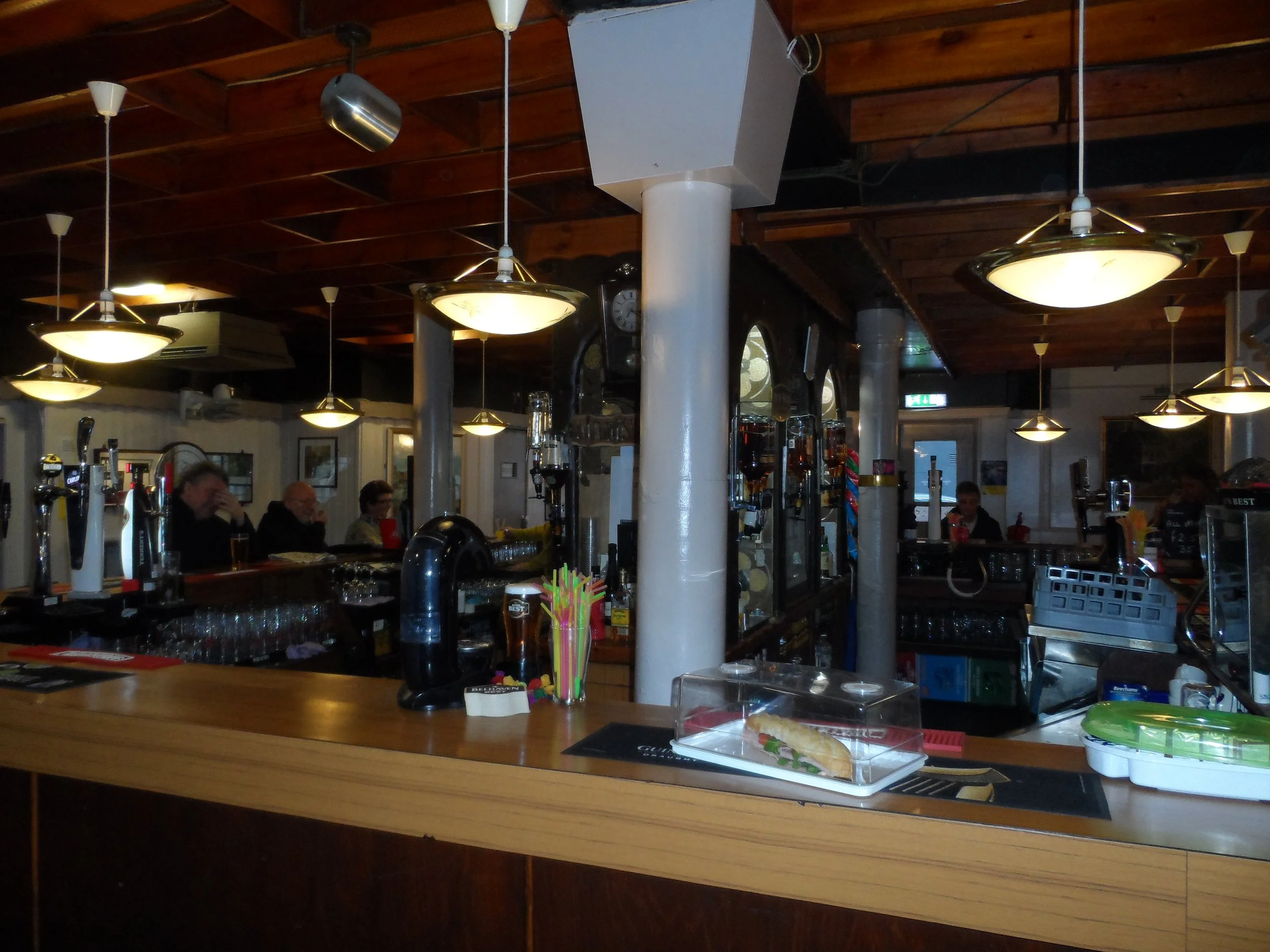
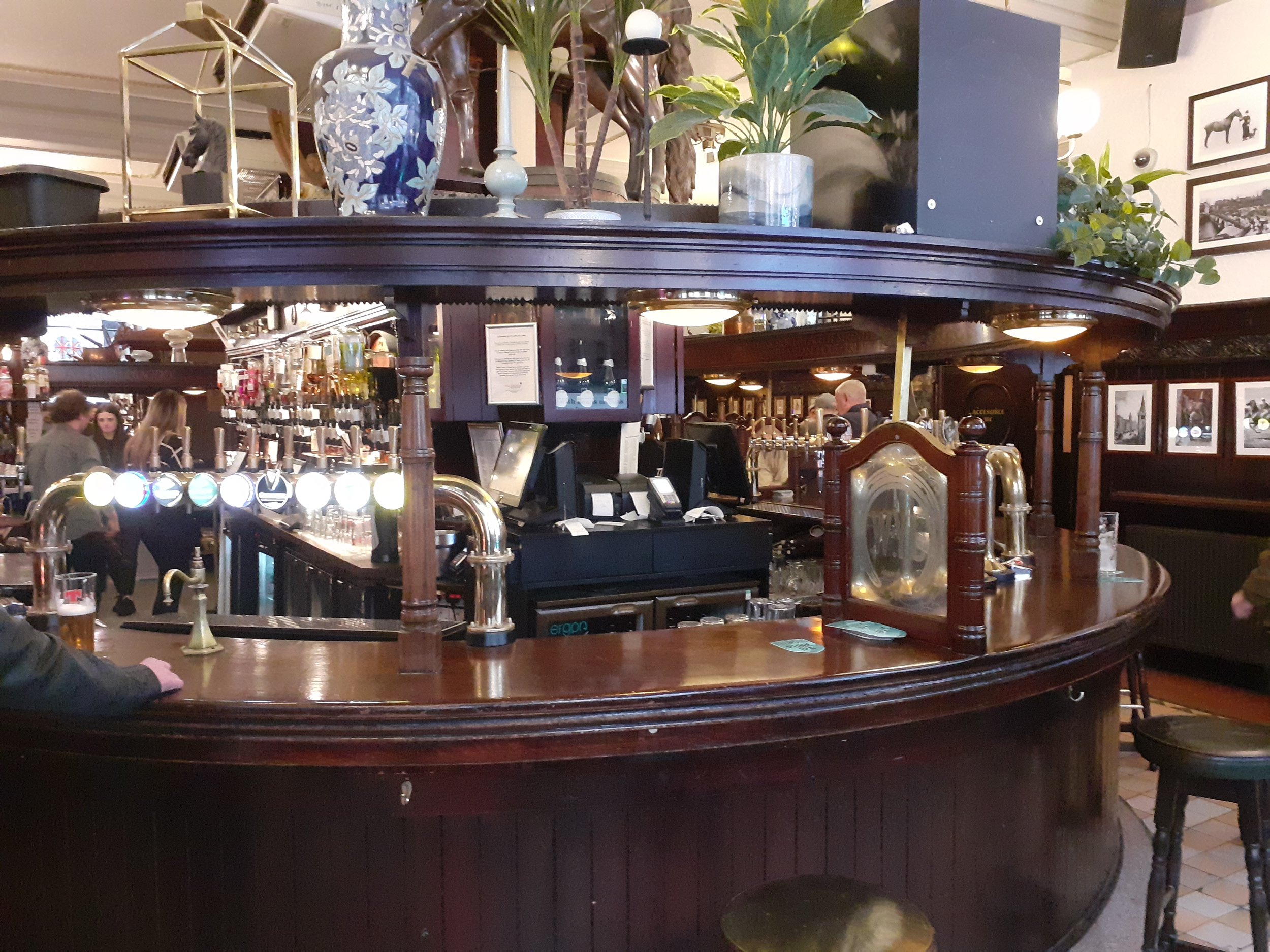
The Horseshoe Bar, Glasgow - longest counter in Britain at 104 feet. Partitions between small rooms and bar removed 1901

Sloans, Glasgow -

Cairns, Glasgow - island/oval bar
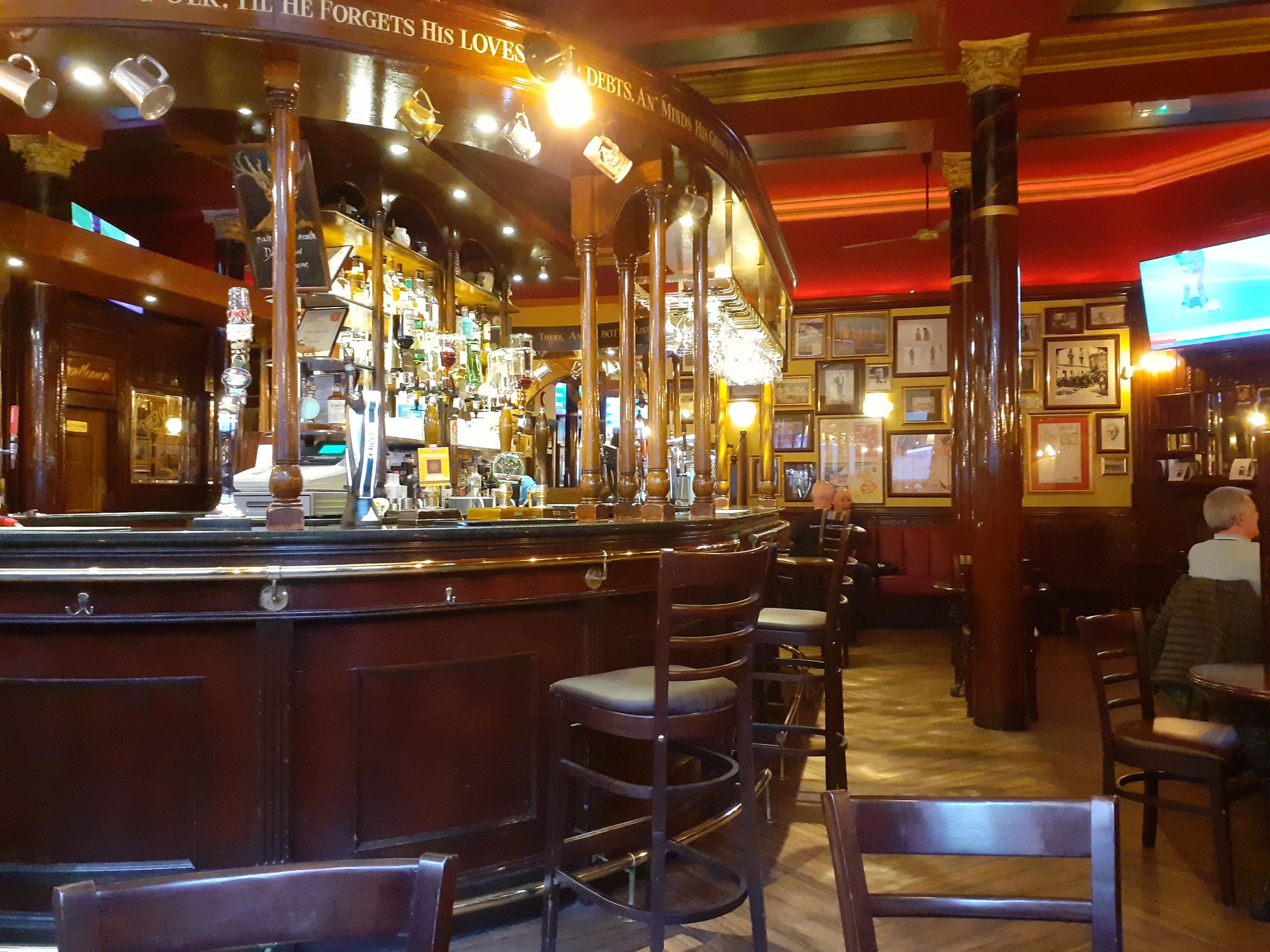
The State, Glasgow - island bar and lots of brass including counter to top of servery
Scottish bar interiors became increasingly decorative as redesigns made them more open, easier to supervise, and more acceptable to magistrates. However, these roomier spaces could also look bare, so decorative brasswork began appearing on counters and large mirrors were added to the walls.
Whisky and beer were originally poured from casks kept behind the bar. These casks were supported on gantries, frames designed to hold barrels. Even after beer began to be pushed up from the cellar by water pressure, whisky casks often remained behind the bar. This area became known as the gantry, and, as bars were made brighter and more decorative, gantries grew increasingly elaborate, with mirrors, carved shelves, and polished supports. Occasionally, these carvings were erected on the bar counter itself. The polished wood and mirrors reflected light around the room, which was especially useful in the many narrow but long bars that existed.
Although English pubs could also have elaborate back bars, they seldom included spirit barrels.

Old Toll Bar, Glasgow - decorative mirrors
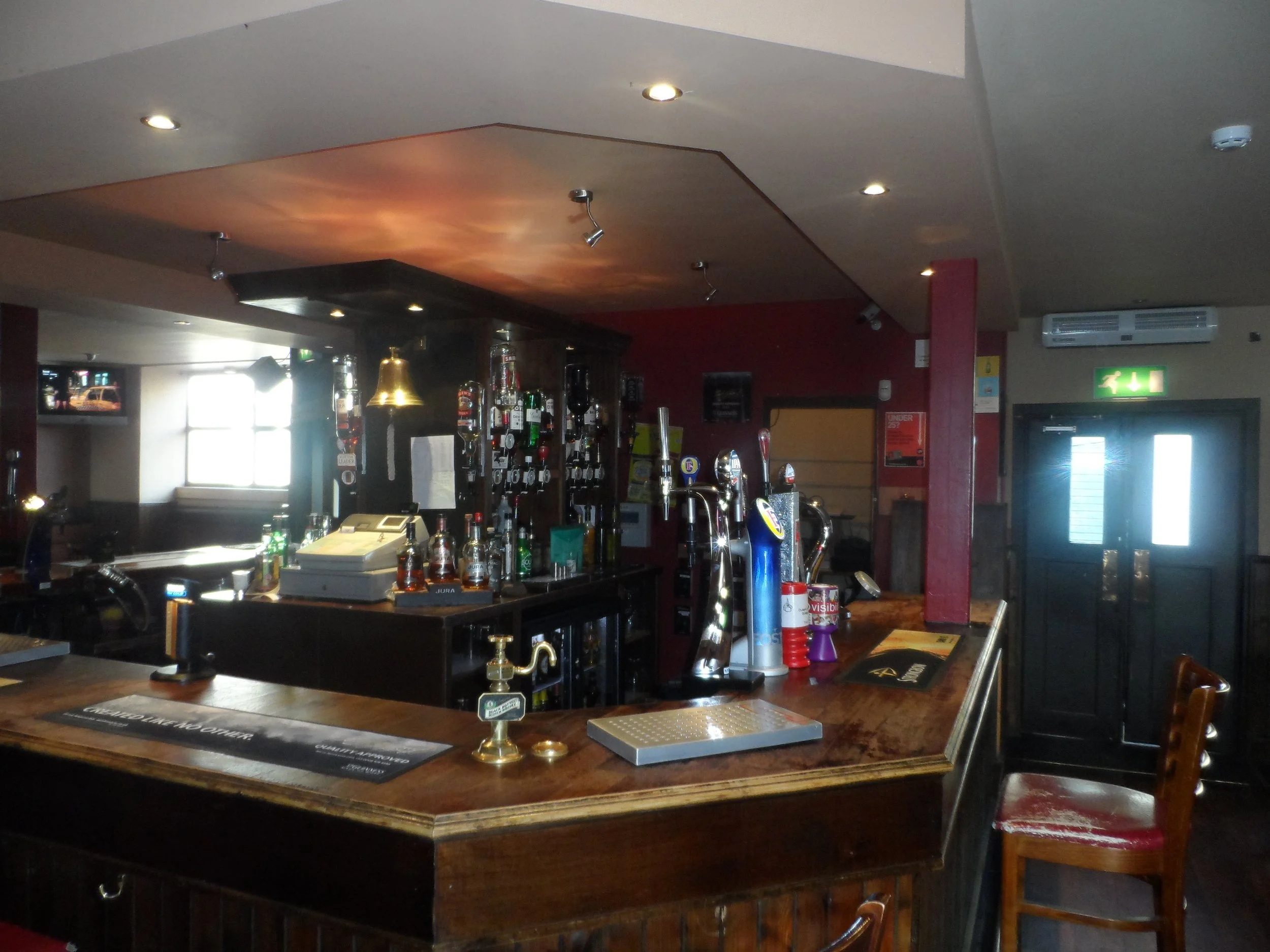
The Puffer, Dunoon - water tap for diluting whisky
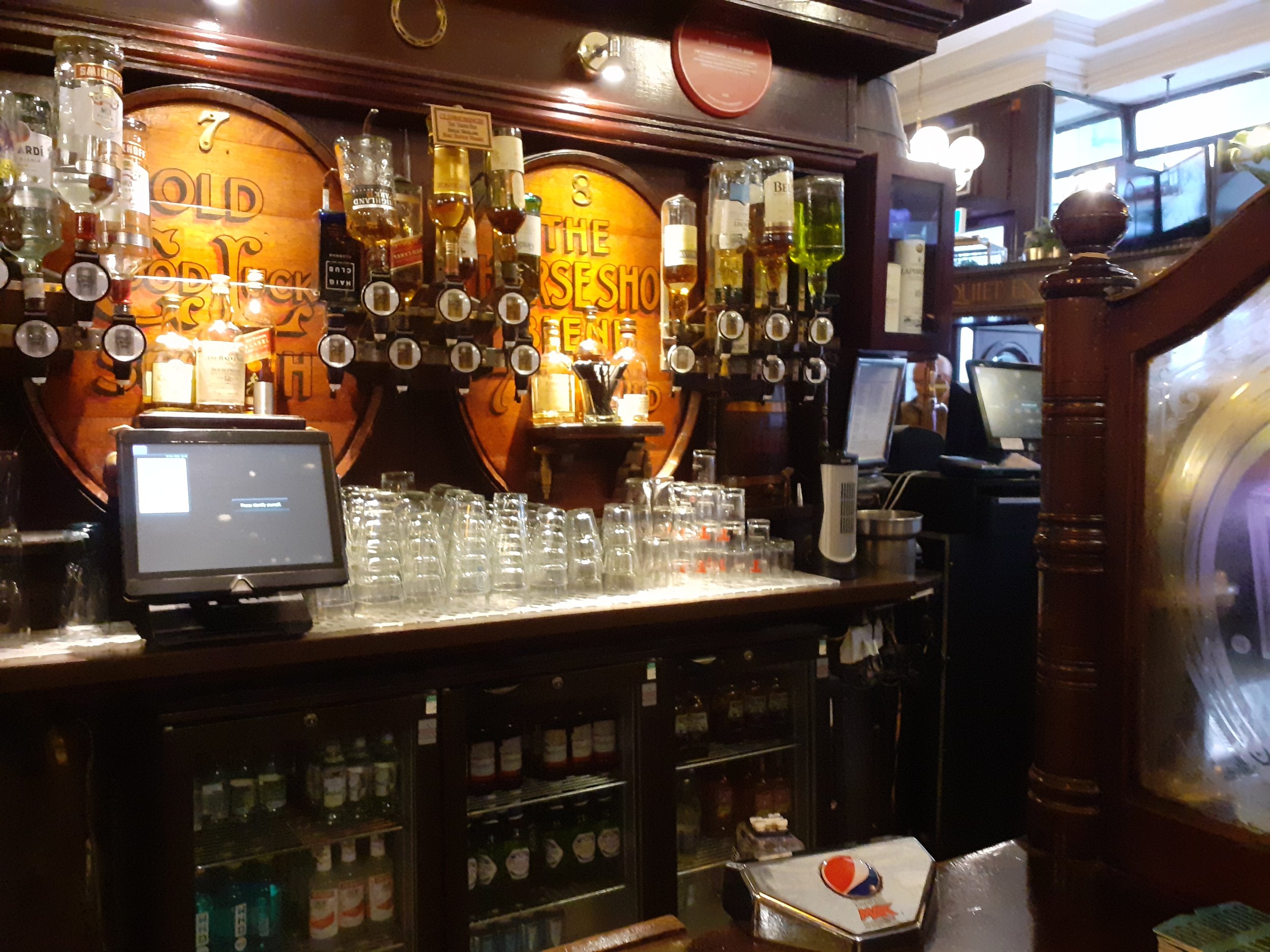
The Horseshoe, Glasgow - whisky casks on gantry
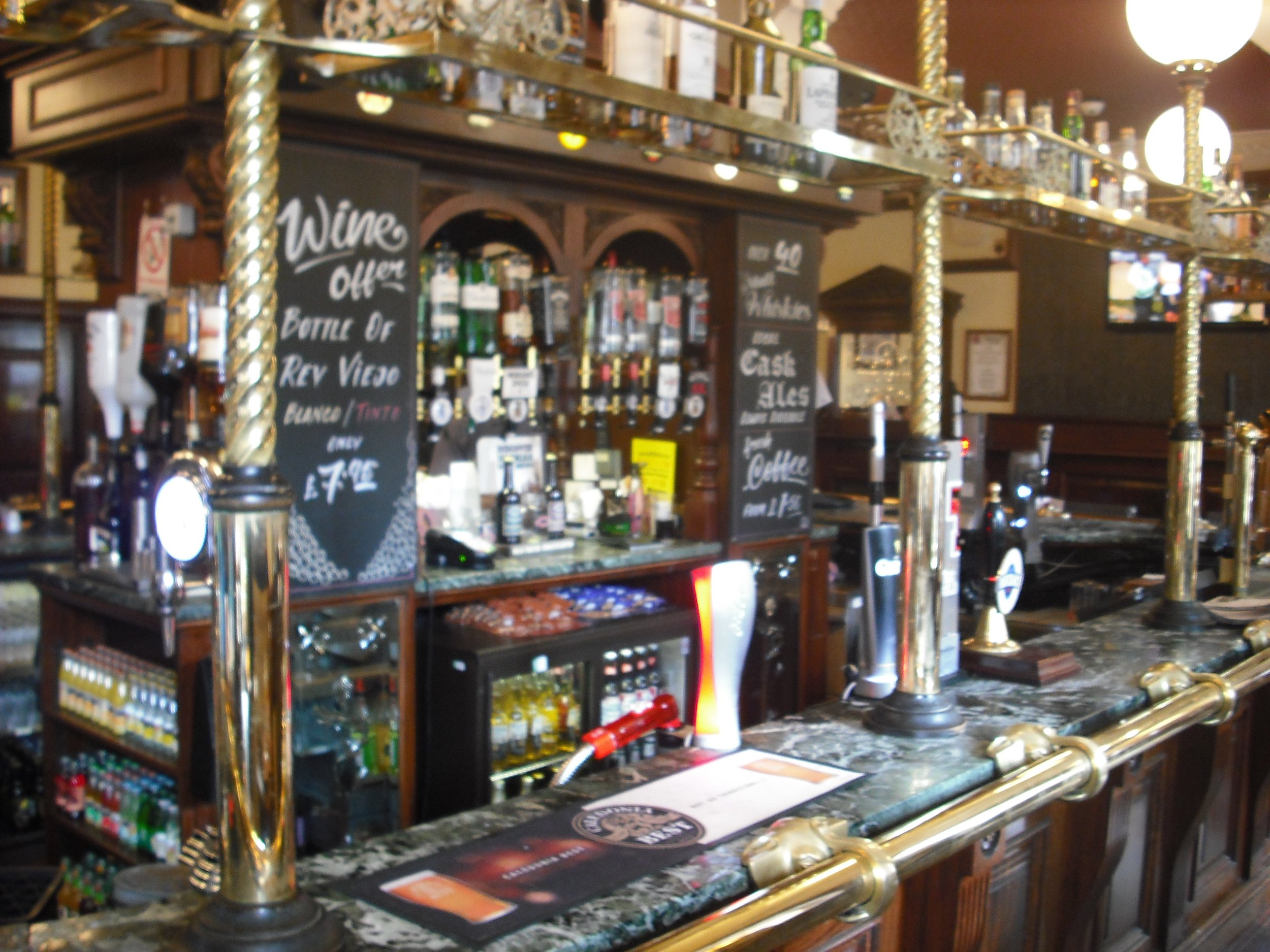
The Lorne, Oban - island bar with lots of brass including supporting a shelve above the counter

PUB QUIZ
What writer of detective novels also came up with the advertising phrase “Guinness is Good for You” ?
Answer at foot of page
Clubs
Clubs, which required rules and some form of membership, emerged from a mixture of illegal drinking places and groups formed around shared interests.
Many began as informal or formal meetings in taverns and increased in number after the Union. Cooke gives examples including the Aristocratic Society for the Improvers of Knowledge of Agriculture (1723), the Lawnmarket Club for wool traders, and the Weaver’s Society of Anderston, among the many hundreds that existed. Clubs became important organisations for people with common interests to share knowledge, for members of the professional classes to meet socially, and, by the mid-1800s, for the upper and middle classes to move away from public bars. Sports clubs also became popular, and some societies eventually acquired their own premises.
Publicans objected to clubs because they could open on Sundays, set their own hours, avoid licence duty, and operate as private organisations outside normal police supervision. Unlike licensed premises, clubs were not subject to local objections, and their proprietors did not have to demonstrate suitable character to the authorities.
The 1872 Licensing Act sought to curb drunkenness by making drunken behaviour illegal and setting closing times of 10 p.m. in most areas and 11 p.m. in London. However, the Act applied only to bars and did not cover private members’ clubs. Although the legislation was primarily intended to protect upper-class and professional private clubs, working men’s clubs and many other common-interest clubs were also able to benefit from this exemption.
The 1903 Act attempted to address the club situation. Clubs had become especially popular from 10 p.m. on Saturday through to Monday, as they allowed members to avoid Sunday closing restrictions. Under the Act, clubs had to be registered to sell alcohol and were required to provide their rules, regulations, and membership lists. This strengthened many legitimate clubs while driving some less reputable operations underground. The Act helped make clubs more respectable, but their numbers continued to grow: Glasgow had 49 registered clubs in 1904, 60 the following year, and 71 by 1908. Some clubs continued to operate as gambling and drinking dens until they were caught. In Scotland, registered clubs continued to benefit from Sunday pub closures until 1976, when Sunday opening for bars was finally permitted.
Read Clubland by Pete Brown , a celebration of working men’s clubs in England.

Clubland by Pete Brown
Tied Trade, Brewery Ownership, and the Scottish Beer Market
The tied-trade system was far less dominant in Scotland than in England, where brewery ownership of pubs reshaped the market and later prompted concern from the Monopolies Commission.
Background
The tied trade did not develop in Scotland to the same extent as it did in England. Most Scottish pubs were free houses, owned or rented by individual operators, although many entered loan or distribution arrangements with breweries that created partial ties without necessarily requiring exclusivity.
In the 1970s, it was not unusual to see beers from different breweries served in the same Scottish bar. Since the Beer Orders and the rise of pub companies, broad beer ranges have become more common across the UK, particularly for lager.
Some modern arrangements still resemble soft tying. For example, a small minimalist bar may offer Tennent’s Lager, Caledonia Best, and Magners Cider, while a larger bar may add Menabrea, Heverlee, or a beer from Drygate Brewery. These brands sit within, or are closely connected to, the C & C portfolio, with Drygate Brewery operating as a collaboration between C & C and Williams Bros.
Scotland, Scottish & Newcastle, and the Free Trade
In the 1960s and 1970s, Scottish & Newcastle was considered one of the “Big Six” brewery companies. It was formed in 1960 when Newcastle Breweries merged with McEwan’s and Younger’s of Edinburgh, creating a company with around 1,100 pubs.
Compared with Allied, Courage, Watney, Whitbread, and Bass Charrington, this pub estate appeared relatively modest. However, the merger gave Scottish & Newcastle extensive access to the free trade in Scotland and the north of England, making it a major seller of beer despite owning fewer pubs than several English competitors.
England and Brewery Ownership
In England, most public houses had traditionally been owned by breweries and used to sell those breweries’ beers exclusively. During the 1960s, merger and takeover activity accelerated sharply: between 1955 and 1968, around 200 breweries were taken over.
These acquisitions were not primarily driven by a desire to acquire better beers. Many breweries were bought with assurances that their beers would continue to be brewed, but numerous sites were soon closed for economic reasons.
The Monopolies Commission
The Monopolies Commission’s 1969 report on the supply of beer in Britain recommended that beer supply should be opened up and argued that the tied-house system operated against the public interest.
At the time, 86% of English pubs were owned by breweries, including 78% owned by one of the Big Six. In Scotland, by contrast, only 27% of pubs were brewery-owned, and most bars remained in individual ownership. Early forms of pub companies were beginning to appear, as some businesses already owned groups of pubs.
Pub Ownership Among the Big Six
Brewer in 1960 Pubs owned in 1960 Brewer in 1972 Pubs owned in 1972
Ind Coope 2,500 Allied 8,000
Charrington 2,400 Bass Charrington 9,300
Courage 3,500 Courage 6,000
Scottish & Newcastle 1,700 Scottish & Newcastle 1,700
Watney 4,000 Watney 6,000
Whitbread 2,500 Whitbread 8,500
Source: Christopher Hutt, The Death of the English Pub (1973).
Birmingham as an English Example
Derek Cooper, writing in The Beverage Report (1970), described Birmingham as having 815 pubs, of which 729, or 89.4%, were owned by two of the Big Six brewing groups: Bass, through Mitchells & Butlers, and Allied Breweries, through Ansells.
The remaining 86 pubs and around 400 clubs in the area would also have been supplied mainly by these two groups. Mitchells & Butlers pubs sold Brew XI, M&B Mild, and Worthington E as their specialist keg bitter, while Ansells offered a comparable range of Ansells Bitter, Ansells Mild, and Double Diamond as its specialist keg bitter. Both Double Diamond and Worthington E had existed as bottled beers before becoming keg beers.
Scottish Market Concentration Without Full Tying
Even without the same tied-house structure, the Scottish beer market remained highly concentrated. By 1992, Scottish & Newcastle held a 45% market share, Tennent Caledonian, owned by Bass, held 40%, and Tetley/Carlsberg, linked to Allied, held 9%.
Belhaven Brewery illustrates how Scottish brewers combined tied and free trade. Although Belhaven owned only 62 bars, those tied houses accounted for 18% of its beer sales, while the remaining 82% went to the free trade.

The Three Reasons, Largs - a free house
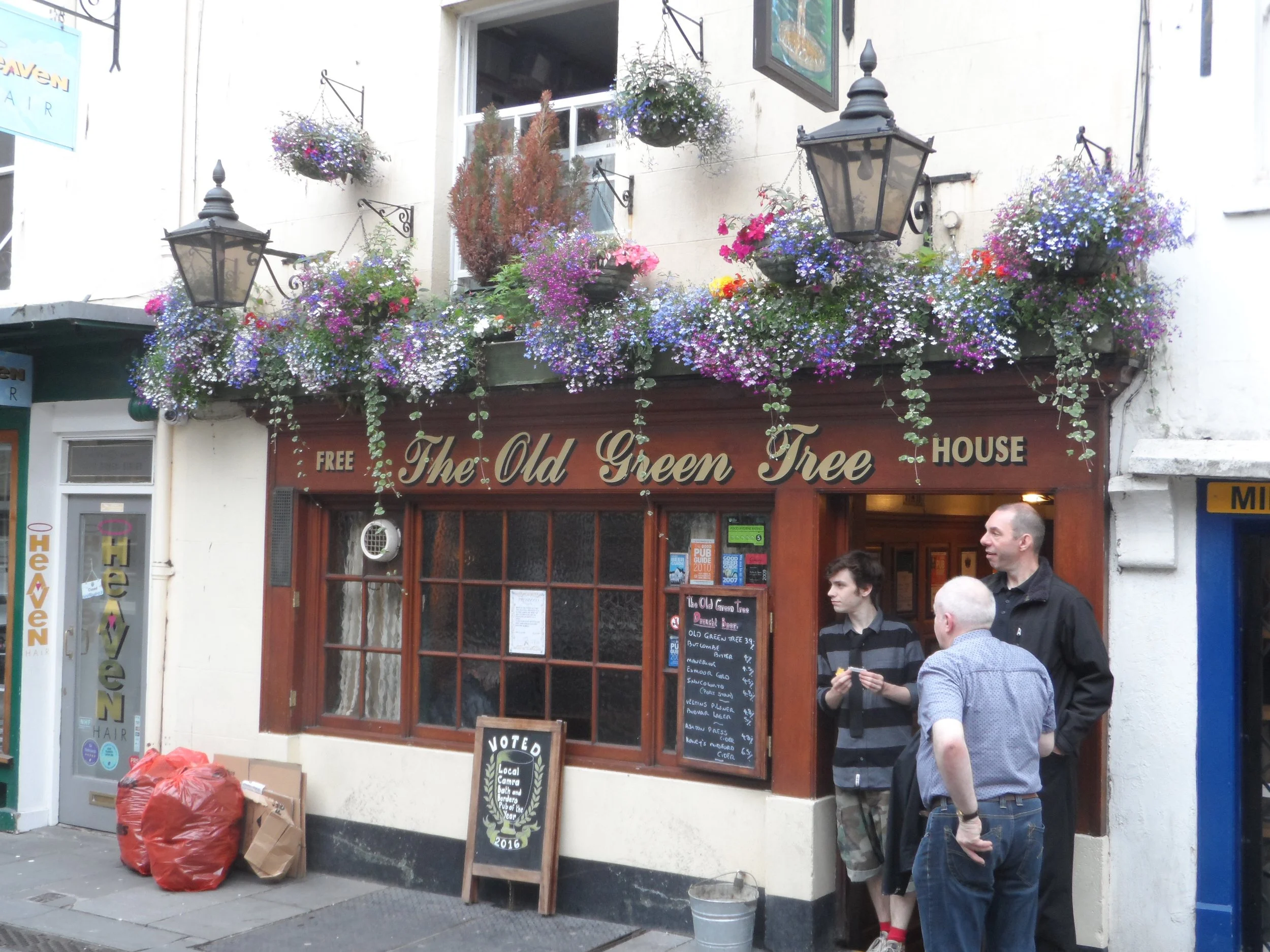
The Old Green Tree, Bath - unusually a free house in England

Committee Room No 9, Glasgow - no tie
5. Naming Beers
In mid-twentieth-century Britain, Scottish and English brewers used different names for broadly comparable beer styles, even as consolidation and the rise of lager began to reshape the market. In Scotland, beers were not generally described as Bitter and Mild; the rough equivalents were Heavy and Light. English special bitters were often closer to what Scottish brewers called Export or 80/-, while lager used the same name in both countries. During the 1950s and 1960s there were many individual beers, but most breweries produced versions of a relatively small group of styles- bitter, mild, special bitter. As brewery takeovers accelerated, the number of independent breweries declined, driven as much by the pursuit of pub outlets as by the removal of competition.
Among the “big six” brewers, regional identity still mattered. Each group typically offered a local mild and bitter through a large brewery it owned. In Birmingham, Bass Charrington controlled Mitchells & Butlers, acquired by Bass in 1960, and sold Brew XI alongside M&B Mild. Allied Breweries, formed in 1962 through the merger of Ind Coope, Ansells and Tetley, owned local brewer Ansells, which sold Ansells Bitter and Ansells Mild.
Each of the big six also promoted one or more keg brands nationally. Allied Breweries had Double Diamond at 3.5% ABV and Tetley; Bass Charrington had Worthington E at 4.2%; Whitbread had Tankard at 3.9%; Watney’s had Red at 3.4%; Courage had Tavern at 3.8%; and Scottish & Newcastle had Tartan Special at 3.9%. In Birmingham, the most visible examples were Double Diamond and Worthington E. In the lager market, Bass Charrington offered Carling Black Label, while Ansells pubs sold Skol.
Overall, beer styles available to drinkers in Scotland and England were relatively limited. However, lager was already becoming increasingly important to both brewers and consumers. In 1963, lager held only 1% of the UK beer market but accounted for 19% of beer advertising expenditure. By 1968, lager had risen to around 20% of beer sales in Scotland, roughly twice its share in England.
Scottish beer naming was also shaped by a nineteenth-century beer-duty system, which existed alongside terms such as Heavy and Light. Duty had been charged in shillings, with stronger beers paying more. Although the system changed, the terminology survived, and some beers continued to be marketed by their former duty rating. Morrison’s 90/- India Pale Ale, commonly called “90 shilling,” is one example.
The shilling labels remained useful for marketing, particularly at 60/-, 70/-, 80/- and 90/-. In this notation, “/-” denoted shillings before decimalisation. Over time, however, the name no longer corresponded to the actual duty paid. For example, 80/- once represented £4, because 20 shillings equalled £1, but that historical duty value is now less than the cost of a pint.
60/- was broadly equivalent to Light beer. Beers around 3.5% ABV or lower could therefore be labelled as 60/-, Light, or both. In broad terms, this was the Scottish equivalent of mild.
70/- or Heavy, a term connected with the runnings from which the beer was made, can be regarded as broadly comparable to bitter, with an ABV of around 4%.
Export or 80/-, usually around 4% to 5.5% ABV, was perhaps closest to special bitter. These comparisons remain approximate, because Scottish beers often had a distinct flavour profile: they tended to be maltier, sweeter and darker than many English counterparts.
A final stronger ale category was above 6% ABV and was commonly called Wee Heavy or 90/- ale. This could be compared, cautiously, with barley wine.

The Cellar Bar, Oban - with McEwan's 70/-

The Scotia Bar, Glasgow - with Belhaven 80/-

The Laurieston Bar, Glasgow
6. Dispensing Cask
Draught beer was traditionally stored in wooden barrels and, for centuries, was served directly from the barrel. By the 1880s, however, many Scottish pubs were using air and water pressure systems. A small engine converted mains water pressure into air pressure, pushing beer from the cellar to the bar counter. Bar staff then turned a tap on top of a tall faunt, or font, to pour the beer into the glass.
In the 1950s, electric compressors began to replace water-pressure systems. The faunts used with these systems could be tall and decorative. By contrast, the English hand pump, now common in Scotland’s real ale pubs, works by suction rather than pressure.
Although pressure pumps could raise beer higher than the hand pumps used in English pubs, they never became popular in England, possibly because English casks could not withstand the pressure and were prone to leaking.
Keg beer and keg lager made significant inroads in Scotland during the 1960s, even more so than in England. By 1976, Licensed to Sell by Brandwood, Davidson and Slaughter reported that the Scottish Real Beer Guide listed 207 outlets: 161 used electric compressors, 9 used hand pumps, and the remainder used water-pressure compression.
As real ale reappeared, Scottish bars increasingly adopted hand pumps rather than compressors. Hand pumps made the presence of cask ale clear, avoiding confusion with decorative keg faunts and compression-dispensing taps. By 1984, Real Ale in Scotland recorded 470 pubs with hand pumps, alongside 212 using air pressure and 228 using electric pumps.
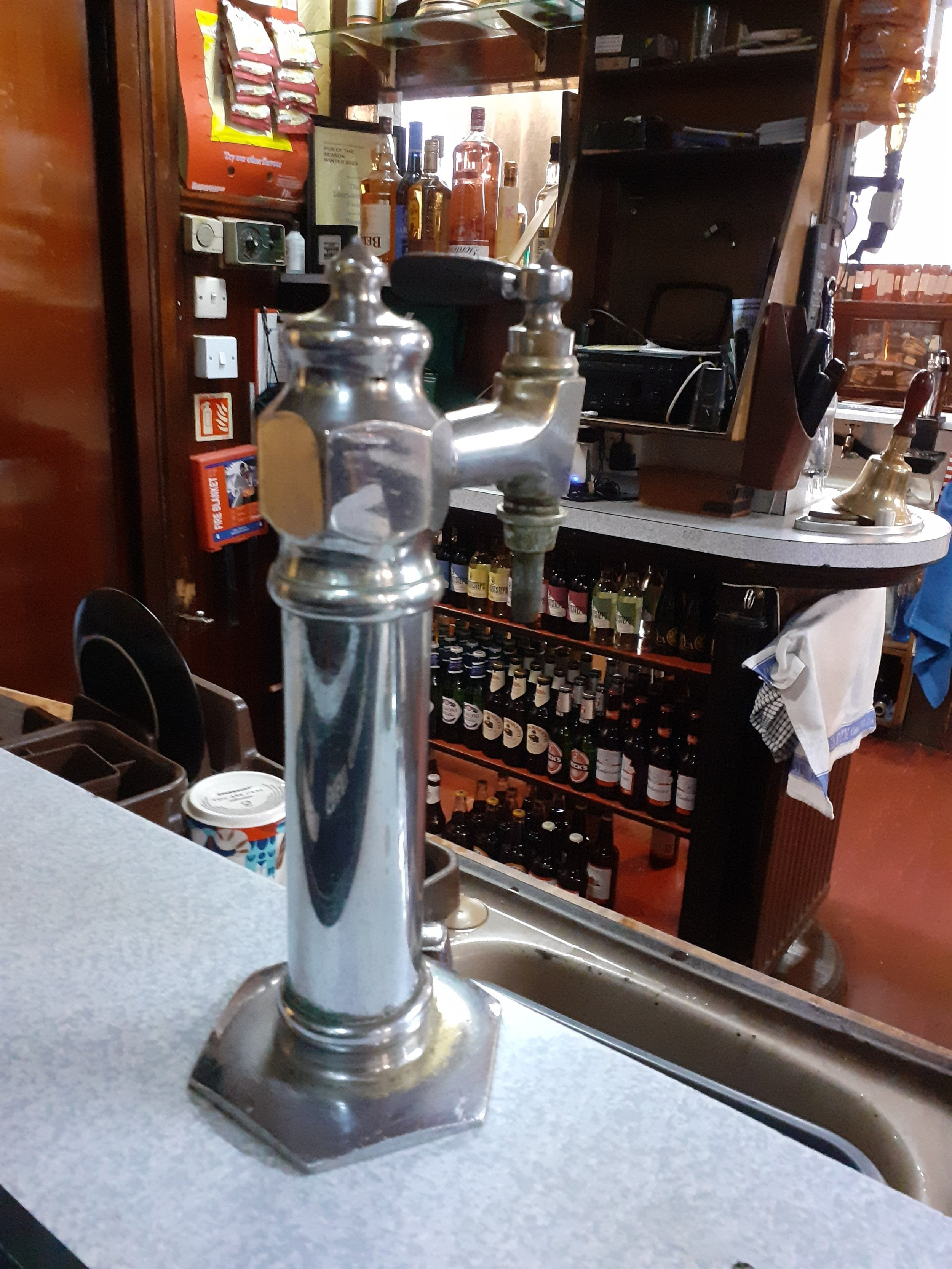
Lauriston Bar, Glasgow - water pressure founts for dispensing beer - originally in The Rising Sun

The Viceroy, Glasgow - water pressure founts for dispensing beer c19th Century

The Viceroy, Glasgow - water pressure founts for dispensing beer c1950s
Returning spillage to cask was a shock to me. I was disturbed enough by attempting to put spillage in pints when I worked in Scotland but going back in the barrel was a step further. The Junction was a Mitchell & Butlers pub as had been The Junction Hotel which was in the position before 1903. The main draught beers were Brew IX and M & B Mild. The special beer was Worthington E and Carling was the lager. It was not that the pub was a real ale promoting pub, it was just that, like most pubs in the area, cask had never been removed.
The Junction had a good name for Mild. Our Bitter spillage would, above a certain volume in the barrel, be returned to the bitter and similarly the mild to the mild. Whereas The White Horse had a good name for bitter as it did not return anything to the bitter, though it emptied bitter and mild spillage the mild.
From 1963 https://www.theguardian.com/theguardian/2014/feb/12/beer-pubs-slops-hygiene and from 2011 http://tandlemanbeerblog.blogspot.com/2011/01/filtering-back.html
You do hear of the early 70s of places being real ale desert. This was questionable in Birmingham. Real ale was still being sold in almost all of the pubs in the area where I lived , however the desert part would describe the lack of choice. Basically we had Brew XI or Ansells Bitter. However, compared to Norwich a city that claims a pub for everyday of the year, real ale in 1967 seemed to be limited to The Wild Man.(Tolly Cobbold) in the city.

The Wild Man, Norwich - kept real ale alive in Norwich
Dispensing spirits
In 1971, rum, whisky, vodka and gin could be sold in measures of a quarter, a fifth, or a sixth of a gill — approximately 36, 28 or 24 ml. In Scotland, the usual measure was a fifth of a gill, while in England it was a sixth. In some Scottish clubs, a quarter-gill measure was still served. Oddly, these measures were not formally standardised until the Weights and Measures Act 1963.
I worked at a holiday camp in Scotland whose headquarters were in England, so we sold spirits in sixth-gill measures. This caused frequent complaints from Scottish guests, who were used to receiving the larger Scottish measure.
The Birmingham pub where I later worked was, in every sense, an old man’s pub. We sold no more than a couple of bottles of whisky a week, and although the pub was in a student area, the students rarely came in.
7. Taste and drinking habits
By the late 19th century, Britain produced 34,456,345 barrels of beer, of which only 5.7% were brewed in Scotland (PP). Much of Scotland’s beer was exported, with the largest share going to the British East Indies.
The Oxford Companion to Beer suggests that, traditionally, Scottish ales of different strengths were brewed using the parti-gyle method, whereby stronger ales were collected from the first runnings of the mash and boiled and fermented separately. These “heavies” may have had an alcohol by volume content of 9–10%.
The second runnings would become one of the weaker ales, yielding an ABV of around 3.5%. A possible third running produced low-alcohol brews referred to as “twopenny ales”.
Fermentation was carried out at the ambient temperatures of cold Scotland and, as a result, levels of fruit esters tended to be low. For the same reason, stronger Scotch ales have traditionally had more residual sugar.
At the time of the Union, Scottish beers would probably have been maltier than English beers, as the Malt Tax on English beer was not applied to Scottish brewers when the parliaments joined. It was not introduced in Scotland until 1713, and even then was not widely enforced until a new Malt Tax in 1725. This caused riots in Edinburgh and Glasgow. Scottish brewers had therefore benefited from 18 years without a malt tax, making their beer much cheaper and giving drinkers a taste for it. The arrival of excisemen after the Union came as a shock to Scottish brewers.
The Dictionary suggests that Scottish beers have never been particularly well hopped because hops do not grow in Scotland, so the beers tended to be less hoppy. Yet there is evidence that Edinburgh beer used a similar quantity of hops to English beers: Younger’s of Edinburgh was buying hops from Sussex, Suffolk, East Kent and Worcester in 1856 (Good Company: The Story of Scottish & Newcastle by Berry Ritchie). Younger’s beers had some popularity in London, as 20% of production passed through London for export and a good proportion was drunk there. However, the use of the milder Worcester hops again suggests Scottish beer was less heavily hopped.
Edinburgh, with water similar to Burton-on-Trent, increasingly produced India Pale Ale. Weaker beers also became more popular in Scotland; for brewers, weaker beer meant lower duty and a quicker turnaround, eventually opening up Scotland’s taste buds to the lager trade.
The 2020 Good Beer Guide, when charting beer styles, matches sweet beers with malty ones and describes the style as “traditional Scottish beers”.
LAGER
Lager was imported into Scotland in the 1870s. As sales grew, J. & R. Tennent began brewing lager in 1888 and opened a dedicated lager brewery in 1906. John Jeffrey in Edinburgh also brewed lager from 1906.
Pete Brown (Man Walks Into a Pub) argues that Scottish beer was already more like lager than English beer, being “less hoppy, less bitter, and lighter, without the frothy head associated with English bitter”.
This may explain why a cold drink became so popular in a cold climate.
By 1971, lager sold better in Scotland than in England, accounting for 20% of beer sales in Scotland compared with 10% in England. This was well before 1973, when Terry Lovelock created the Heineken lager advert: “The beer that refreshes the parts other beers cannot reach,” a campaign often credited with helping to accelerate lager sales.
In 1963, lager had 2% of the market. Heineken and Carlsberg were trying to sell their lager in Britain but were gaining little interest, even with lime added. By 1971, however, lager had nearly 10% of beer sales overall, and 20% in Scotland, where Tennent’s Lager was the major seller. In the mid-1970s, Heineken became the best-known lager in the country, though at a lower strength than in Europe, following the successful advertising campaign “Heineken refreshes the parts that other beers do not reach” (campaign background) (advert).
By 1976, lager accounted for 25% of beer sales overall and 40% in Scotland. By 1979, lager had reached 29% of sales, rising to 43% in 1986 and finally exceeding 50% in 1990. Today, Tennent’s Lager has 60% of Scotland’s lager market, followed by Peroni, Carling and Stella. In fact, lager now represents a substantial share of the Scottish beer market. In bars that do not serve real ale, it is common to find only one heavy or bitter on offer alongside several lagers. Two examples are The Toby Jug, with Caledonian Best as its heavy or bitter and twelve lagers, and nearby Stereo, which offers no keg heavy or bitter and eight lagers.

The Toby Jug, Glasgow - lagers are Angelo Poretti; Kelvin (Drygate);; Tennent’s; Carlsberg; Stella; Estrella ; San Miguel Special; Heverlee; Carling; Tuberg; Erdinger
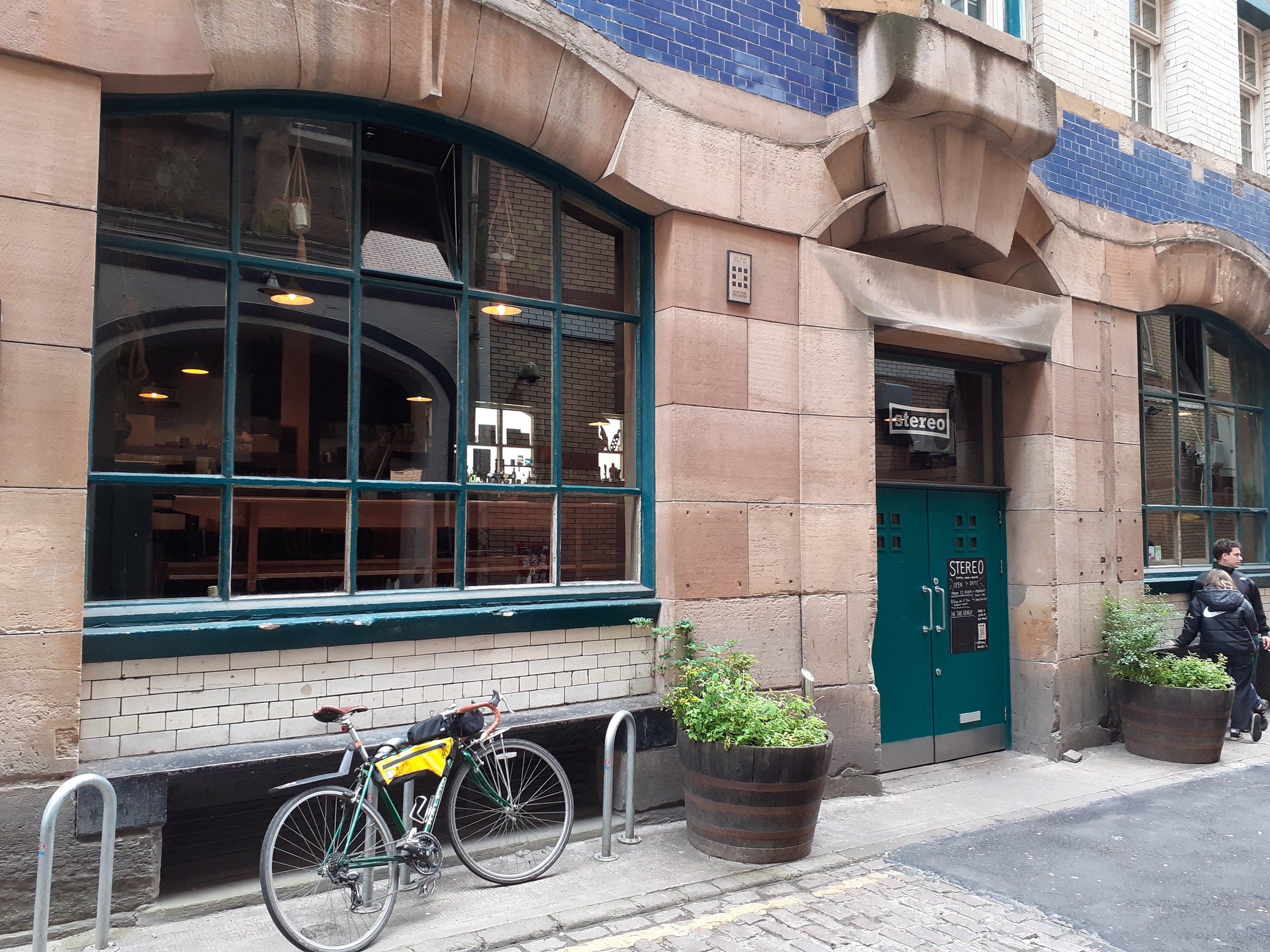
Stereo, Glasgow - lagers are McEwan's; Estrella; Birra Moretti; Afflinghem; Heineken; Fosters; Amstel; Krusovice
Different habits
When I first worked as a barman at The Junction in Birmingham, a customer asked for a “half and half”, and I confidently produced a whisky with a half-pint of beer, which taught me that confidence is no substitute for local knowledge. He had expected a pint made up of half bitter and half mild, not a small drinking itinerary.
The manager expected staff to drink behind the bar: if no customer had bought you a half-pint, you were to pour one yourself and keep it topped up, purely in the interests of quality control, of course. His reasoning was simple: if the staff would not drink the beer, why should customers risk it? One rule, however, was sacred: never hold a glass up to the light to check whether the beer was cloudy. If you did, half the pub would suddenly discover expert powers of observation and arrive at the bar demanding replacements, often after conducting extensive research at the bottom of their own glasses. That particular drama could not arise in Scotland, where drinking behind the bar was not permitted.
In Scotland, I noticed that a new round was usually triggered by the sight of an empty glass, which seemed to function as a small emergency beacon. In England, by contrast, the next round generally waited until most people had finished their pints and the table had reached a more collective state of thirst. The difference may have owed something to glass-handling rules: in England, drinkers often handed back the same pint glass to be refilled, while in Scotland the glass had to be replaced and washed. It was a subtle distinction, but both countries could still be relied upon to produce the familiar stampede for the final one or two drinks.
In both countries, some drinkers seemed to value coldness and convenience over flavour, especially when choosing very cold beer or drinking straight from the bottle; by that stage, the taste buds had apparently clocked off and gone home.
8. Open Air Drinking
Outdoor drinking was not historically a normal feature of pub culture in Scotland.
Even after licensing hours were extended in 1976, including in areas where longer hours were intended to accommodate tourists, public authorities and anti-drink campaigners remained cautious about allowing customers to sit outside with alcohol.
Pavement seating was often viewed as socially undesirable, and many Scottish pubs had not been designed with outdoor drinking areas in mind.
A key factor was the physical form of many Scottish pubs, which were commonly built into the ground floors of tenement buildings rather than as standalone premises.
As a result, they usually lacked front or rear gardens, leaving pavement space as the only practical location for outdoor seating.
This helps explain why the large pub car parks and beer gardens more commonly found in parts of England were less typical in Scottish towns and cities.
The Rose Tavern in Norwich illustrates the contrast: although it is a corner pub flanked by terraced housing, with the landlord’s accommodation above, it still has space for seating at the front and a large rear garden.
By contrast, The Doublet in Glasgow occupies the ground floor of a tenement building with flats above it, leaving outdoor seating possible only by using pavement space; at the rear, the available open areas are drying greens associated with the flats.

The Red Lion, Handbridge Chester - outside seating at front - seldom room for this in Scotland

Rose Tavern, Norwich - large back beer garden

The Red Lion, Stockton Heath with a bowling green - not seen in Scotland in a pub. No games policy was modified to allow darts and Dominoes. Plenty of Bowling Clubs.
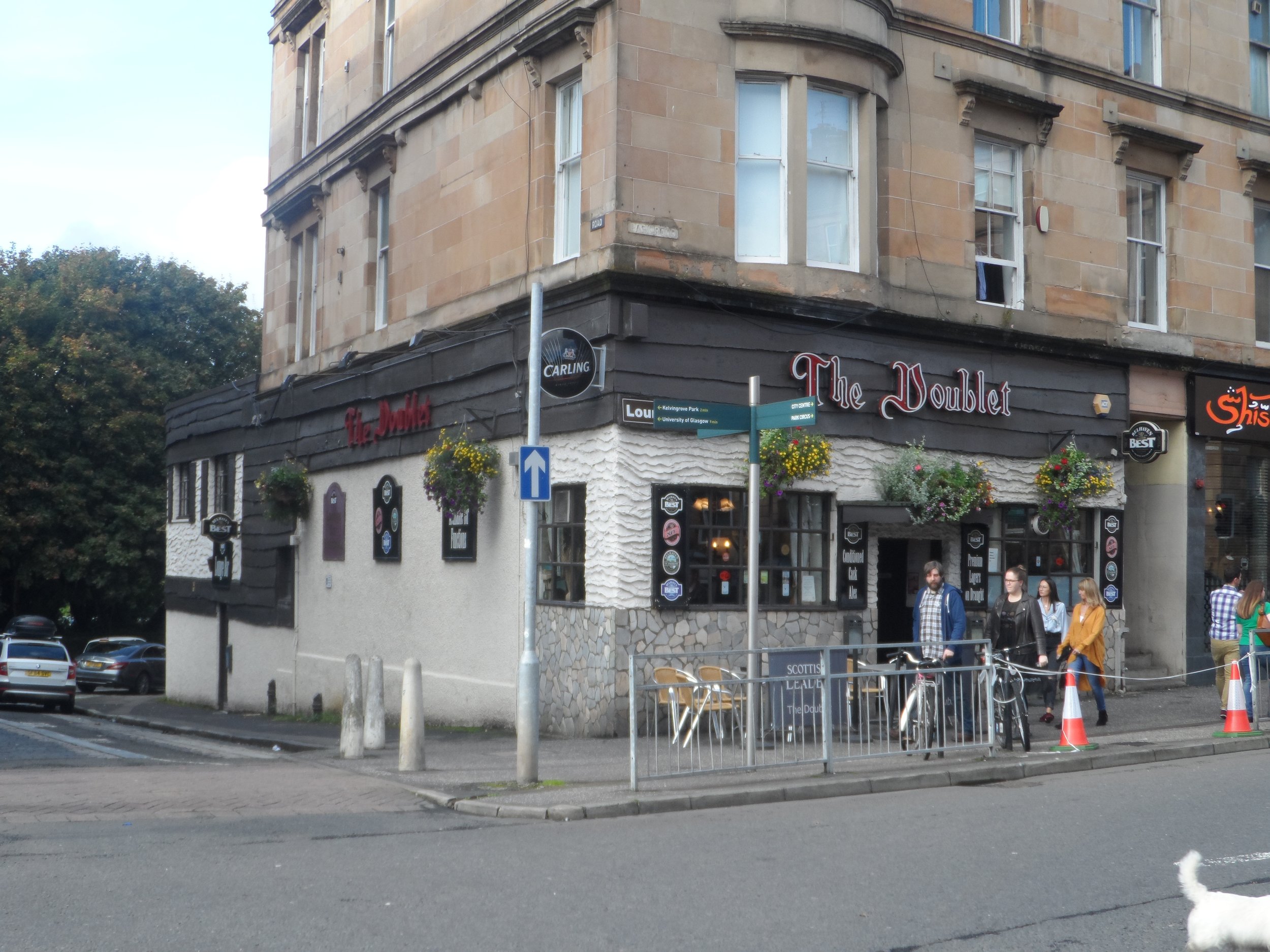
The Doublet, Glasgow - trying hard to get some tables on the pavement

The Unthank Arms, Norwich - seating outside but not on pavement and surrounded by terraced houses.

Red Lion, Stratford upon Avon - beer garden. Not in Scottish City pubs
Suddenly “beer gardens” were advertised in bars some of which were little more than small slabbed standing areas without even a plant pot as an ashtray.
Many beer gardens, in both countries, lack grass and plants, and even though they don’t grow pints of beer are still labelled ‘beer gardens’.
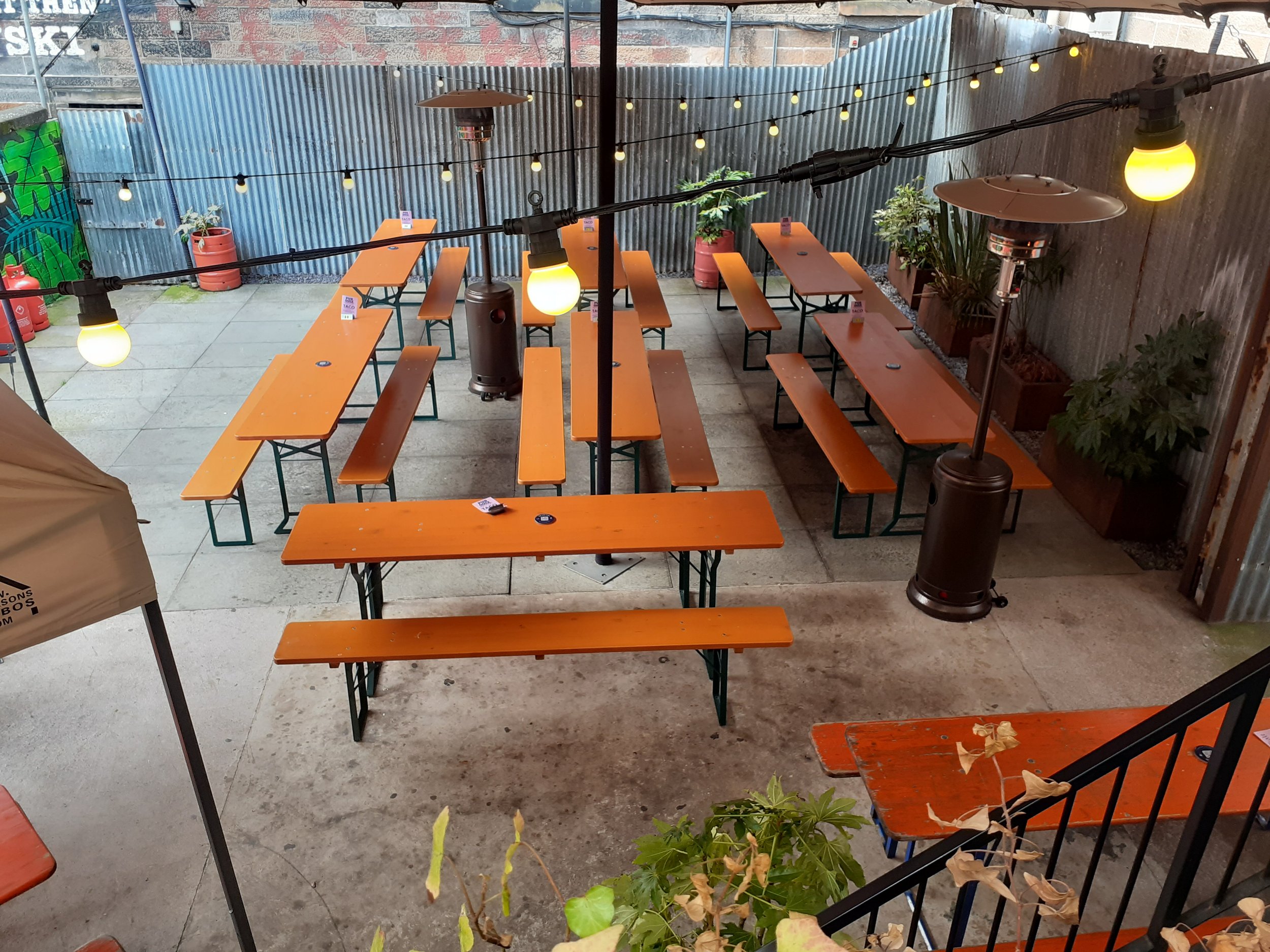
The Locale, Glasgow -outside seating in back yard with some plants to make a "garden"

Ye Olde Royal Oak, Knaresborough

The Golden Rule, Ambleside
The more touristy a place was the more likely that at some point outside seating had been allowed. The problem would be finding a piece of pavement to put some tables on. As years wound on a fortunate few bars in cities found that the road outside had been pedestrianised so they could layout tables and chairs.

The Amsterdam, Glasgow - outside at a pedestrian precinct

The Counting House, Glasgow

The Pavement - aptly named now has seating in pedestrian area
Some had basement entrances where tables could go.

The Big Slope, Glasgow - outside basement of tenement

Buck's Bar, Bath St, Glasgow - some barrels as tables at a basement entrance
8. Open Air Drinking con’t
When Greenock hosted the Tall Ships Race in 2000, outdoor pavement seating was permitted outside local pubs for the first time. The arrangement ended once the ships had left, suggesting that the permission was treated as a temporary concession for visitors rather than a lasting change for local venues.
At the start of the Covid pandemic and restrictions on drinking, and it is easy to believe that many organisations, health officials and politicians were pleased to see the closure of bars brought more drinking in outside spaces.During the Covid pandemic, restrictions on indoor drinking shifted more social activity into outdoor spaces. When bars reopened under distancing rules, demand for outdoor seating increased further, and permissions for its use became more common. The Cardwell Inn in Gourock illustrates this change: its outdoor area expanded after the pandemic and remains in use.
Taken together, these examples show how outdoor seating in Inverclyde moved from a short-term exception to an accepted part of local hospitality.
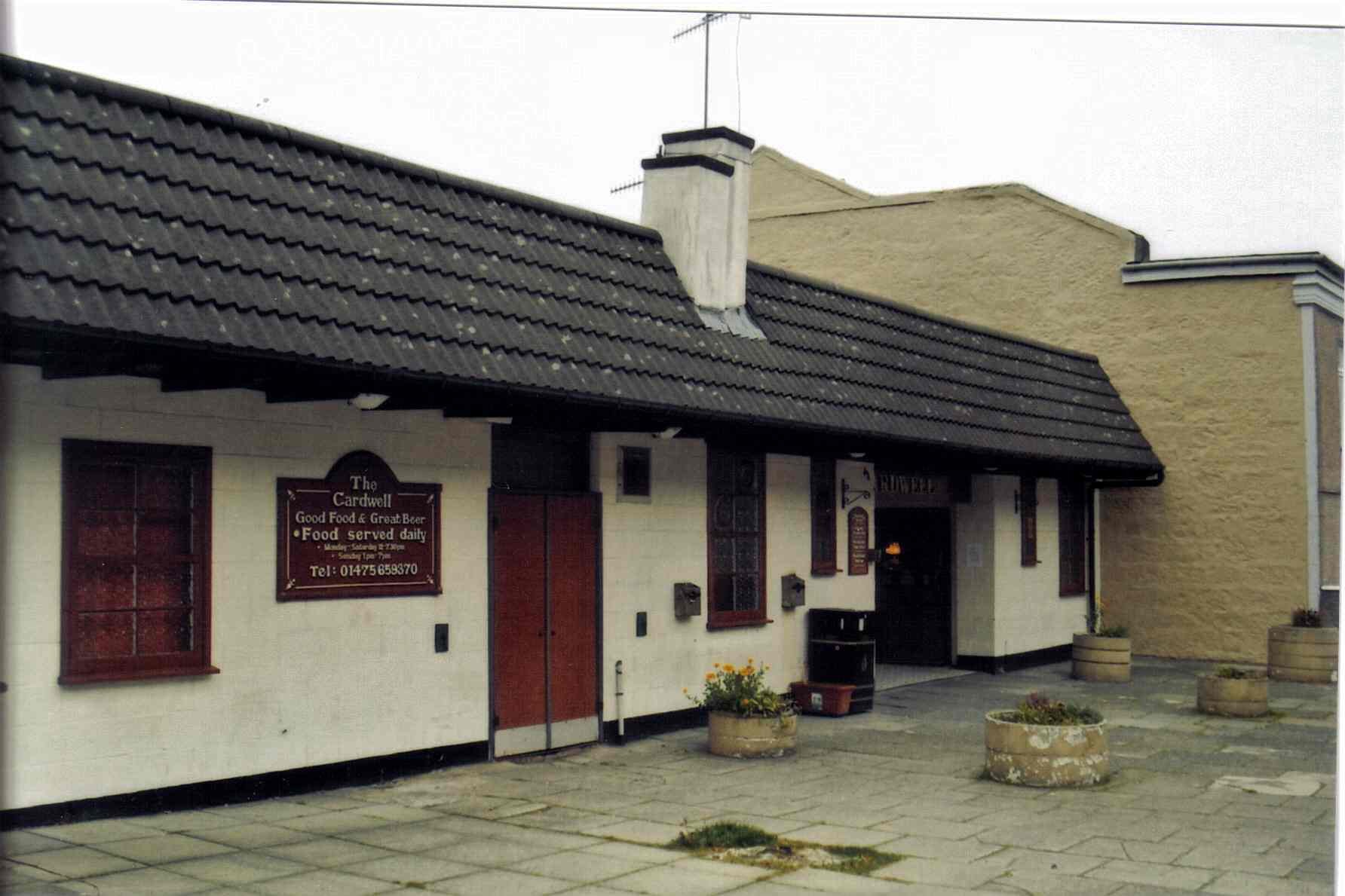
Cardwell Inn, Gourock - pre-pandemic
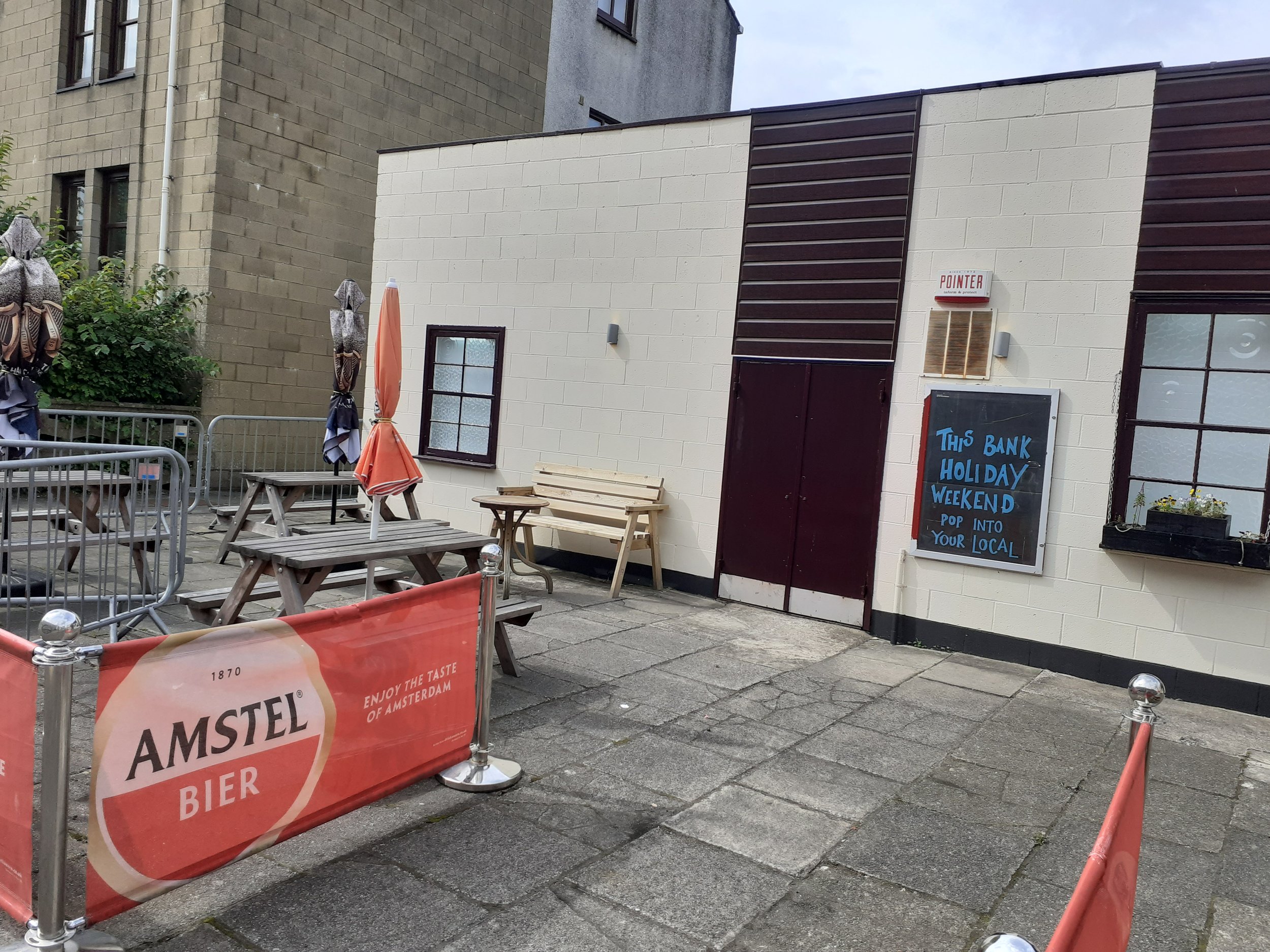
Cardwell Inn, Gourock -pandemic and after
9. Smoking Ban
The smoking ban in public places in Scotland, including bars, came into effect on 26 March 2006.
England and Wales followed more than a year later, on 1 July 2007.
We quickly became accustomed to the ban in Scottish pubs; while on holiday in Hunstanton in August 2006, we were indignant to see someone smoking in a hotel bar, although they were not breaking English law at the time.
Many bars had previously operated without outdoor areas, particularly in Scotland, where such spaces had not traditionally been common. After the smoking ban came into effect on 26 March 2006, bars began looking for rear spaces where smokers could gather instead of standing by the front door, although for many venues the entrance remained the only option.


The Thistle, Inverness - not everyone was happy
Scotland’s route towards longer hours - more detail in “History” section
Scotland’s move towards longer pub opening hours was not the result of a single decisive reform, but of partial legislation, parliamentary amendment, and increasingly flexible local interpretation.
Clayson and Erroll Committees In 1971, the Conservative Government established two committees to examine licensing law in Britain: the Erroll Committee for England and Wales, and the Clayson Committee for Scotland. The Clayson Committee reported in 1974, by which time Labour was in government and its recommendations fell to the teetotal Secretary of State for Scotland, Willie Ross. The Wilson Government did not embrace the report in full. Although some Scottish reforms were introduced in 1976, the equivalent English recommendations were not implemented until 1988. As a result, Scotland unexpectedly found itself with less restrictive licensing laws than England. Clayson’s recommendations included later evening closing, Sunday opening for pubs, allowing children to accompany adults into pubs, and opening from 11am to 11pm.
Limited initial reform In 1975, Willie Ross announced that the Government intended to implement only parts of the Clayson report. He accepted extended evening hours to 11pm for pubs and hotels, but rejected broader changes to drinking times. Of the major recommendations affecting the public—refreshment house licences, children’s certificates, Sunday opening, 11pm closing, and afternoon opening—Ross accepted only extended evening hours and refreshment house licences. The Bill then passed to the Scottish Standing Committee for detailed consideration.
The Government loses ground Against the Government’s wishes, the Scottish Standing Committee voted to allow Sunday opening. The decision passed by 10 votes to 4, with three Labour MPs rebelling.
The Committee therefore added Sunday opening, though not all-day opening, and the House of Lords accepted that position. By October 1976, the Lords had accepted both the extra evening hour and Sunday opening. By December 1976, Scottish pubs were able to close at 11pm.
Positive early behavioural changes By July 1977, the Government reported that drink-driving cases had fallen by 20 per cent after the additional evening hour was introduced. Officials suggested that people were taking a more relaxed approach to drinking. Beer consumption did not rise: in the first three months of 1977, 25 million gallons were consumed, the same amount as in the first three months of 1976.
Sunday opening Sunday opening took a year longer to come into effect. The new Licensing Boards were not established until 1 July 1977, and the first meetings at which Sunday licences could be considered were held in October. The first pub granted one was the Cowie Tavern in Stirlingshire.
How all-day opening emerged All-day opening developed through the Act’s provisions for occasional and regular extensions to permitted hours. Section 64 allowed extensions where local “social circumstances” or “activities taking place locally” justified them, wording that licensing authorities could interpret broadly.
Tourism offered an obvious basis for regular extensions and initially appeared uncontentious, although many areas limited such extensions to the summer season. The same reasoning then widened: business lunches, shift workers, and city shoppers all became potential grounds for extended hours. Once one premises secured an extension, nearby pubs could use that decision as a precedent.
In Glasgow, Peter Keenan obtained the first 11am to 11pm licence for Thursday, Friday, and Saturday. The nearby Off The Record Bar argued that it catered for the same clientele and should therefore be treated similarly. Gradually, more 2.30pm to 5pm extensions were granted.
Concerns and inconsistencies Not everyone welcomed the spread of extensions, and practice varied considerably between licensing areas. The Scottish Office offered little clarity on interpretation, instead leaving decisions to local licensing authorities. The police accepted that local markets and tourism could justify extensions, but often objected to applications in practice, creating an inconsistent position.
Some publicans argued that if their standards were acceptable before and after the afternoon closing period, they should also be acceptable during it. Licensing authorities, however, used the extension system to encourage higher standards in pubs. That approach was difficult to oppose where the stated beneficiaries were tourists, shoppers, business customers, and families, and it also reflected one of Dr Clayson’s broader aims: that bars should become more family-friendly.
All-day licensing becomes policy In 1979, Glasgow Licensing Board decided as a matter of policy to grant applications for all-day licences in city pubs, provided publicans met the required standards. Board chairman Councillor Phil O’Rourke said the Board’s attitude had been shaped by its belief that all-day licensing in the city had so far been “a complete success”.
England’s delayed reform On 19 December 1974, the Labour Government was asked when it would implement the Erroll report. Dr Summerskill replied that the House had debated the report on 19 October the previous year, but that several recommendations, particularly those concerning young people and extended licensing hours, remained controversial. She stated that the Government needed more time to consider the report. In practice, the Erroll report did not resurface until 1988.
11. Still fighting alcohol
Scotland’s love-hate affair with alcohol, though for many it is a hate-hate affair creates a history that has been littered with plans to reduce alcohol drinking by hiding alcohol away and making it as unsociable as possible. Historically drinking places were hidden away and policed - down closes, no landlord on premises when closed, Sunday closing of bars, short opening hours, no music or entertainment allowed, no games, temperance started.
Scotland has a long history of alcohol policy that seeks to reduce harm by restricting visibility, availability, and sociability, but this approach risks overlooking the deeper drivers of alcohol-related harm: poverty, weak alcohol education, and the dominance of off-trade sales.
The quote below is from the Ministerial Foreword from the consultation paper by Maree Todd MSP on restricting alcohol advertising
“It is also likely that alcohol marketing influences heavy drinkers and acts as an incentive to drink, which can make abstention more challenging for those in recovery. This is in addition to the likely impact marketing has on our wider society, by normalising alcohol and presenting it as fun, sociable, commonplace, and even part of a healthy lifestyle”. As a foreword, this frames the consultation around the assumption that alcohol should not be presented as fun, sociable, commonplace, or compatible with a healthy lifestyle.
The temperance movement began in Greenock, a town then marked by poverty and poor housing conditions, and Greenock remains one of Scotland’s most deprived communities, with high levels of alcohol-related illness and death. Research shows that alcohol-related health harms are far higher in deprived areas than in the least deprived areas, yet policy still tends to treat alcohol primarily as the cause rather than also considering it as a consequence of poverty; meanwhile, alcohol education in schools is far less visible than education about illegal drugs.
a) Minimum pricing
In 2012, the Alcohol (Minimum Pricing) (Scotland) Act introduced a minimum price of 50p per unit of alcohol. The policy was intended to reduce alcohol consumption across Scotland, particularly among people drinking at levels that seriously affected their health or contributed to premature death, with cheap supermarket alcohol a central target.
Public Health Scotland’s final evaluation, published in June 2023, reported that minimum unit pricing was associated with estimated reductions in alcohol-attributable deaths and hospital admissions. This came from a report by Sheffield University link. However, the evaluation also noted that the benefits were not universal, with some heavier drinkers continuing to buy more expensive alcohol and reducing spending on essentials such as food or heating.
After the report was published, some commentators questioned whether its conclusions had been overstated. Public Health Scotland later updated its “findings at a glance” material to make clear that the reported reductions in alcohol sales, deaths, and hospitalisations were estimates based on the evaluation evidence..
After the report was published, some commentators, including Dr Sandesh Gulhane, the Scottish Conservative shadow health secretary, questioned whether its conclusions had been overstated. Public Health Scotland later updated its “findings at a glance” material to make clear that the reported reductions in alcohol sales, deaths, and hospitalisations were estimates based on the evaluation evidence.link
Scotland’s drink-drive limit was reduced from 80mg to 50mg in December 2014; this brought Scotland into line with many European countries, although it remains lower than the limit elsewhere in the UK.
There is also a ban on multi-buy promotions in supermarkets. While intended to reduce bulk purchasing, this may also reduce price competition between retailers.
b) Proposals to restrict advertising of alcohol
In 2022, Maree Todd led a consultation on proposals to restrict alcohol advertising and promotion, with the stated aim of reducing alcohol’s influence on young people and lowering consumption across Scotland. Scottish Government consultation
The proposed restrictions could have extended from newspaper and shop-window advertising to branded items such as umbrellas, bottles displayed on shelves, and pump clips. The proposals also raised practical questions for brewers promoting alcohol-free products, such as whether Guinness 0.0 could be advertised while Guinness could not.
Following criticism from the alcohol and hospitality industry Scotland’s First Minister Humza Yousaf said the consultation would be taken “back to the drawing board”.
Report from HarperMacleod lawyers https://www.harpermacleod.co.uk/insights/alcohol-advertising/#:~:text=Outdoor%20and%20public%20spaces%3A%20a,non%2Dalcohol%20products%20was%20proposed.
If Scotland is not pursuing prohibition, then simply hiding alcohol from view is unlikely to be an effective or balanced answer. Public houses and bars should be considered part of the solution rather than treated primarily as the source of harmful drinking, while supermarkets and other off-trade retailers also need to be central to policy because most alcohol in Scotland is sold through off-sales.
Historical evidence from Mass Observation, quoted in Peter Haydon’s An Inebriated History of Britain, suggests that areas with more pubs did not necessarily have higher drunkenness convictions. The figures are historical rather than contemporary, but they support the argument that supervised social drinking spaces may be safer than pushing alcohol consumption into less visible settings
Pubs per 10,000 people Average convictions per 10,000 people
0–10 11.02
10–15 9.97
15–20 8.01
20–25 5.96
25–30 5.53
30–40 5.52
40+ 4.11
The figures below are from Monitoring and Evaluating Scotland’s Alcohol Strategy: Monitoring Report 2019. MESAS monitoring report 2019
In 2018, 9.9 litres of pure alcohol were sold per adult in Scotland, equivalent to 19.0 units per adult per week and the lowest level recorded in the available time series. Beer accounted for 31%, spirits for 29%, wine for 29% and cider for 7%. Most alcohol sold in Scotland was purchased through the off-trade, meaning supermarkets and other off-licences rather than pubs and bars. Alcohol sales per adult were higher in Scotland than in England and Wales, largely because of differences in off-sales purchasing. Since 1994 off-trade sales have increased by 36% while on-trade sales have fallen by 44%.
In September 2026, Carolyn Lochhead, chief executive of the charity Alcohol Focus Scotland, condemned excessive drinking by Scottish football supporters in Boston during the World Cup. https://www.thetimes.com/uk/scotland/article/tartan-army-world-cup-fans-alcohol-p2gpdrf2x This example again focused public criticism on pub-based drinking, even though the broader policy evidence points to the importance of off-sales in Scotland’s alcohol market.
A little bit of history
Scotland’s pubs have played a significant but under-examined role in the country’s social history. This article argues that tracing their development reveals how drink, licensing, class, travel, and urban life shaped everyday Scottish experience. Rudolph Kenna and Anthony Mooney, in People’s Palaces: Victorian and Edwardian Pubs of Scotland (Paul Harris, 1983), and Anthony Cooke, in A History of Drinking: The Scottish Pub since 1700 (Edinburgh University Press, 2015), both note how little sustained attention has been paid to the influence of pubs and drink on Scottish history. Their frustration points to a wider tendency: pubs have often been treated less as institutions worth studying in their own right than as social problems to be regulated, hidden, or morally contained.
This neglect is visible not only in written histories but also in visual records. Photographers frequently passed over pubs when documenting Scottish streets and towns. In Photographic Memories of Scotland, a collection of more than 400 Francis Frith images from the 1860s, pubs are largely absent: a few hotels appear, including one temperance hotel, and near the end there is a view of Edinburgh Castle looking down on the Black Bull and the Beehive in the Grassmarket, both of which still exist today. Jeffrey and Watson’s pictorial history of Clyde holidays, Doon The Water, is similarly sparse, including only one pub.
The contrast with England is striking. Studies such as Paul Jennings’s The Local: A History of the English Pub and Peter Haydon’s An Inebriated History of Britain have examined pubs as places where social relations, leisure, regulation, politics, and local identity were made visible. Scotland has no shortage of comparable material, but it has not always been brought together into a connected story.
Before the Union in 1707: inns, alehouses, and early regulation
Before the Union of 1707, Scotland’s drinking places were already bound up with travel, hospitality, and public order. An Act of 1424 required inns to be set up for travellers, offering food and accommodation as well as drink. This suggests that early regulation treated such places not simply as sites of alcohol consumption, but as part of the infrastructure needed to move people through the country. Control followed close behind provision. A further Act in 1436 required these inns to stop selling drink at 9 p.m., showing that the authorities were already concerned not only with where drink was sold, but with when drinking took place. Licensing, in this early form, was therefore as much about discipline and timekeeping as it was about trade. Urban authorities developed this concern further.
In Dundee in 1558, a curfew restricted walking the streets or drinking in alehouses after 10 p.m. Later rules extended similar controls to dancing, drinking, and playing music after 9 p.m., suggesting that regulation was aimed not only at drunkenness but at wider forms of night-time sociability. Descriptions by travellers also point to the modest and uneven character of Scottish hospitality. In 1598, Fynes Morrison complained about the state of Scottish hostelries compared with accommodation in England, noting in particular the absence of pub signs — a feature that was still reportedly missing in 1748. Such observations suggest that Scottish drinking places were not yet developing the same visible public identity associated with English inns and taverns.
By the eighteenth century, the landscape of drinking places had become more varied. Alehouses were the most common venues, taverns sold alcohol in a more established commercial setting, and inns offered accommodation and food as well as drink. Some inns also began to copy English designs, reflecting changing expectations of comfort, travel, and respectability. In Glasgow, the Saracen Head, built in 1755, became the city’s first purpose-built inn and illustrates how hospitality premises were becoming more formal, visible, and commercially ambitious. Alongside these licensed premises stood a less formal world of unlicensed drinking. Tippling houses and dram shops often operated from somebody’s front room rather than from a purpose-built commercial premises. Licensed grocers could also blur the boundary between shop and drinking house by keeping rooms or areas at the rear where drink was sold. Shebeens formed another part of this unlicensed economy. They were especially common in towns and cities with large Irish populations and became more prominent when new licensing laws or local vetoes restricted legal premises. Their existence shows how demand for drink could find alternative channels when formal regulation tightened. Unlicensed premises were generally cheaper and often more convenient than licensed houses, and they did not observe official opening hours. They could also be risky: some adulterated drink, including with methylated spirits, and many were associated with crime as well as breaches of licensing law. The contrast between licensed and unlicensed premises therefore reveals an important tension in Scotland’s pub history: regulation tried to impose order, but informal drinking cultures remained resilient.
Hotels occupied the upper end of Scotland’s hospitality hierarchy and appeared relatively late, arriving by 1763. Their emergence points to a more stratified drinking and lodging culture, in which accommodation, comfort, and status increasingly shaped the character of public houses and inns. Brewing also formed an important part of this developing landscape. Edinburgh became the capital of Scottish brewing during the seventeenth century, although brewing in the city had much older roots in the work of the monks of Holyrood Abbey in the twelfth century. The growth of brewing helped connect drinking places to patterns of urban production, trade, and consumption.
As drink became more commercially organised, Parliament also sought to standardise how it was sold. In 1698, an Act prescribed that ale and beer should be sold in pints, full quarts of two pints, or multiples of those measures. Standard measures helped bring the sale of drink into a more regulated marketplace, making quantity, price, and taxation easier to define and enforce. That same year, brewers could be fined £10 for selling ale on which excise had not been paid, and a further £10 for charging customers more than the permitted price. These penalties show how regulation was expanding beyond moral or public-order concerns into taxation, pricing, and consumer protection.

“Most people hate the taste of beer - to begin with.It is, however, a prejudice, most people have been able to overcome”
— Winston Churchill
1700s
During the 18th century, living standards rose and town and city populations grew, partly because people moved south from the Highlands in search of work. These changes also affected drinking habits, increasing alcohol consumption, especially spirits. French brandy and wine were available because of Scotland’s Auld Alliance with France, and claret was consumed in large quantities.
When the Scottish and English parliaments joined in 1707, the malt tax on English beer was not immediately extended to Scotland. It was introduced in Scotland in 1713, but it was not widely enforced until the new Malt Tax of 1725, which caused riots in Edinburgh and Glasgow. Scottish brewers therefore benefited from years of lighter taxation, allowing them to keep beer comparatively cheaper.
Consumption of twopenny ale declined, while consumption of spirits and strong ale increased. Whisky became especially important as whisky drinking moved south from the Highlands.
By the late 1700s, tastes were shifting away from beer and towards cheaper, often poor-quality whisky.
The two Jacobite rebellions brough better roads, lots of soldiers and more people fleeing the highlands.
By 1756 public houses, inn, taverns, ale houses were to be regulated by magistrates and justices of the peace (in countryside) to bring into line with English custom. However, as license fee went up the number granted went down as alehouses and shebeens went underground.
1755 brought the first purpose-built Inn in Glasgow, The Saracen Head, with 36 rooms, importantly not interconnected, by Robert Tennent (of famous brewing family). In 1771 James Graham, a new owner, died his widow jean took over. In 1773 Samuel Johnson and James Boswell visited it on the return from their highland tour. In 1792 it was converted into flats and a new Saracen Head constructed across the road.
1787 beer production rose from 246,000 barrels to 437,000 in 1799 to 350,000 in 1830
PLACES TO VISIT WITH PUBTRAILS
The towns and villages highlighted on this web site have a wide variety of pubs and beers in them. All of the places are great to visit, whether for a day or longer, and most have tourist attractions for all of the family.
There is a large variety of pubs throughout the different towns shown below. Some you may wish never to visit again but even discovering these can be interesting. There are pubs that you would not take your wife into. While some you could not take your girlfriend into. A few you would not take either into. However, most of the pubs are very pleasant.
HOME MAP of places visited
Alnwick Ambleside Anstruther Bakewell Bamburgh Barnard Castle Bath Berwick upon Tweed Birnam & Dunkeld Bourton on the Water Bowness on Windermere Bridge of Allan Chester Chichester Dunblane Dunoon Edinburgh Ely Fort William Glasgow Gourock Helensburgh Inverness Kelso Keswick Knaresbourgh Largs Linlithgow Lyme Regis Melrose Montrose Newton Stewart North Berwick Norwich Oban Pebbles Penzance Portree Pitlochry Quorn Richmond Rothesay St Andrews Seahouses Seend Shrewsbury Skipton Stirling Stratford-upon-Avon Stockton Heath Whitby Windemere Whitstable York
a) Late 18th and early 19th Century
There was considerable economic hardship at this time, and the end of the war with France brought unemployed soldiers and sailors home. Prior to 1790, people from all classes used pubs for socialising, conducting business, dealing, meeting in special societies and celebrating occasions. By the 19th century, however, the upper classes were increasingly moving away from drinking in mixed groups. Women, too, became more wary of where they drank, if they drank at all.
Although wine, whisky and strong ale remained popular, and porter was becoming increasingly so, patterns of alcohol consumption were changing. Beer consumption rose from around 70 pints per head in 1795 to approximately 80 in 1800, before falling steadily to around 48 pints per head by 1830. Spirit consumption also changed considerably, rising from 189,000 gallons in 1780 to 1,167,000 gallons in 1800, and then to 5,777,000 gallons by 1830, before falling to 3,155,400 gallons in 1850 (1).
Fortified wines—particularly sherry, Madeira and port—also became popular. They remained a staple of some pubs, particularly in urban areas, well into the 20th century and, in some cases, until the 1970s.
Magistrates and Justices attempted to reduce the number of licences issued to drinking establishments, but they were less successful in the rapidly growing towns and cities than in rural areas. In the Barony parish of Glasgow, with a population of 18,451 in 1791, there were 169 public houses selling malt and spirituous liquors. In Dundee, with a population of around 24,000 in 1792, there were 179 licensed houses, while contemporary observers reported that there were also a considerable number of unlicensed premises where spirits could be obtained.
The Hume-Drummond Act of 1828 established an important new framework for the licensing of public houses in Scotland. Justices of the Peace in counties and magistrates in burghs were confirmed as the local authorities responsible for granting certificates which controlled the issue of excise licences to pubs, inns and alehouses. Applicants were required to satisfy the licensing authorities as to their character, while the legislation also imposed conditions on the sale of alcohol, including restrictions on opening at unreasonable hours and a prohibition on selling alcohol during the hours of Divine Service on Sundays.
These provisions strengthened and formalised existing restrictions on Sunday drinking rather than introducing Sunday closing for the first time. Some low-class tippling houses reportedly responded by locking their doors during the prohibited periods, thereby keeping customers inside. The legislation nevertheless marked an important stage in the increasingly systematic regulation of Scotland's public houses.
Temperance from Greenock
The first Temperance Society in Britain was founded by a lawyer, John Dunlop in Greenock in 1829.
Greenock, at that time, was a rapidly growing port and involved in cotton manufacturing and sugar refining. By 1831 the population was 27,571 and had doubled in the preceding forty years.
With growth came a large influx of people from the Highlands of Scotland. “In 1792 there were 247 licenses granted for the sale of Spirits one for every 58 people, by 1834 there was a spirit dealer (327) for every 19 families and by 1840 there was a slight reduction to one seller for every 25 families; 31 inns/taverns and 275 houses selling ales and spirits. (1)
West of Scotland 1834
families spirit dealers families per spirit dealer
Glasgow 40,000 2,198 18
Paisley 12,308 454 27
Renfrew 535 30 18
Greenock 6,353 327 19
Port Glasgow 1,279 81 15
Dumbarton 804 71 11
report on select committee on Drunkenness, Parliamentary Papers, 1835, vol viii,pp136-7
It is difficult to believe that licensed houses owners made much of a living in Dumbarton with one licensed house per 11 families when families included children and not all adults would be drinking regularly if at all. However, the increasing population also caused a housing crisis and overcrowding was the norm. By 1911 half of Scots lived in one or two roomed houses while for England & Wales it was only 7%. Therefore, escaping to a drinking establishment may have been a relief.
In 1834 Glasgow and Renfrew had similar ratio of families to spirit dealers as Greenock while Port Glasgow and Dumbarton were slightly worse with as few as 15 and 11 families per spirit dealer respectively.
In 2023 Greenock had the highest alcohol related deaths in Scotland. It is also one of the most deprived areas
a) Late Victorian and Edwardian
Greater control of licensed premises was beginning to be demanded in the 19th century as the Temperance movement grew, allied with churches and liberalism which placed more of a spotlight on social issues associated with drink – its effect on health, families and increased crime. The Government also believed that there was more revenue to be made with greater control.
In 1853 The Forbes McKenzie Act fixed licensing hours in Scotland from 8am to 11pm and brought in Sunday closing except for Hotels/Inns catering for “bona fide” travellers. Initially this drove Sunday drinking and drinking outside permitted hours underground and there was unrest. Though fewer licenses were issued. Clubs also took over from pubs on a Sunday as drinkers attempted to circumvent the law. There was a growth in illegal drinking houses called ‘shebeens’ and there was estimated to be 500 of them in Glasgow in 1894 according to The Scotsman. On the positive side comparing the three years before the Act to the three years after it , drink related crime fell.
drunkenness and drink related crime figures 1852-57
population 1852-4 under old law 1855-7 under new law % decrease
Glasgow 329,097 66,993 53,755 19.6
Edinburgh 160,302 28,905 23,903 17.3
Dundee 78,931 9,598 8,330 13.2
Aberdeen 71,973 13,744 10,357 24.6
Paisley 47,952 2,054 1,527 25.6
Greenock 36,689 9,042 6,287 30.5
D McLaren, The Rise and Progress of whisky Drinking In Scotland and the workings of the Public Houses (Scotland) Act, 1853, Scottish Temperance League Glasgow, 1858, p40
In Greenock this dropped 30% from 9,042 to 6,287 in a population of 36,689. Paisley with a larger population had less than a quarter of the arrests that Greenock had and also showed a 26% reduction in drink related crime.
By 1861 Glasgow had 1,414 licensed premises (mainly termed wine and spirit merchants) and 118 publicans. By 1881 this was 2,295. (1)
Greenock, on the other hand, showed a gradual decrease in licensed premises; 327 in 1834, then 214 in 1859, 137 in 1890 and by 1912 there was 111. The fickle nature of establishments meant that in the forty years from 1850 to 1890 (with a 77 premises drop) of the 111 left only 21 were still at the same address.
The Public House Amendment Act of 1862 introduced penalties for drinking in shebeens, drunk in public, falsely being a traveller on a Sunday and poorly conducted premises. It also allowed for extended opening hours at discretion of magistrate. (2)
1870 Truck legislation prevented the payment of wages in kind , ie food and drink at a pub, and stopped payment of notes, often in a pub, to a group of men who then had to buy drink to get the change so that they all got paid. This often led to spending wages before they got home.
1876 Publicans’ Certificate Act refusal of new certificate to be final and no longer able to appeal and decision to be made by joint committee.
In 1871 Glasgow licensing house were 1 for every 281 people but by 1899 it was 1 for every 424. Although numbers had reduced pubs were still predominately in poorer areas. Cowcaddens (pop 40,700) with 116 pubs, one for every 350) , Gorbals (36,000) and 102 pubs, one for every 352 while Kelvinside, an upper class area where it would be no surprise to find publicans living, had 1 pub.
By 1890s Glasgow magistrates with Presbyterian attitudes reflecting the influence of temperance and Sabbatarians were taking action against lotteries, street betting, theatres shows, billiard rooms, street importuning, steam whistles, obstructions, cafes Chantants (cafes with musical entertainment serving coffee and lemonade) bicycles on streets, beggars, vagrants, public placards, habitual drunkards and unlicensed premises.
Temperance folk tended to be Liberals or socialists ,anti-slavery, anti prostitution, and campaigners against poverty (especially when drink related) though there was a darker side to temperance – anti-irish and anti-Catholic.
Alcohol serving premises had a fight on their hands with 50 out 75 members of Glasgow Town Council pro-temperance (32 total abstainers) and 11 out of 14 Magistrates’ abstainers. Though those who owned or rented bars had among them Magistrates, MPs, councillors, doctors, clergymen etc. No doubt some hypocrisy existed.
By discouraging music and other activities in Bars they were prevented from becoming more social places. Fewer restrictions in England had allowed greater civilising of public houses whereas in Glasgow they were just standing up drinking places. The police, including in plain clothes, were pro-active in watching out for infringements of the licensing laws. (2)
Late 1880s J & R Tennent of Glasgow started brewing lager.
1885 Pure Beer Bill introduced to mean that beer was made from barley malt , hops and water (unless revenue need some additives. Withdrawn as committee set up which reported in 1899 and was in favour of current practice (influenced by brewers).
1887 Hours of Closing Act permitted licensing authorities to impose 10pm closing except in towns of 50,000.
1898 Glasgow magistrates took advantage of additional powers and closed bars at 4pm on New Year’s Day and further closed pubs on some local holidays
1901 Intoxicating Liquors (sale to children) Act prohibited sale to under 14
1903 Licensing Scotland Act offence to supply children under 16 with alcohol, licensing authorities could fix hour of closing at 10pm, (by 1909 Dunoon was only town where bars were open after 10pm), an offence to be drunk and incapable anywhere where public had access including bars. A licensing court was set up in every town of 7,000 people or more. Improvements to premises could become a requirement for renewal of licences. (2)
a) 1914-45
The Defence of the Realm Act was passed on four days after Britain entered the first World War on the 8th of August 2014 giving the Government powers to introduce controls it thought necessary for conducting the war.
It introduced censorship on press and letters from war zones, power to requisition and various other behaviours like flying kites, starting bonfires, buying binoculars, feeding wild animals bread, discussing naval and military matters or buying alcohol on public transport.
Specifically the Intoxicating Liquor (temporary restrictions) Act gave Magistrates the power to limit opening hours
Lloyd George the Liberal Chancellor at the start of the war. He was a teetotaller and anti-drink. His position on alcohol was summed up by “ We are fighting Germany, Austria and drink, and as far as I can see the greatest of these three deadly foes is drink, … doing us more damage in the war than all the German submarines put together”. At the time pubs were open continuously from 5.30 am until late at night. and beer was stronger than now.
When Lloyd George became Minister of Munitions he met and was temped by those calling for complete prohibition who were supported by a petition signed by two million wanting prohibition for duration of war plus six months.
Opening hours for Public Houses became set from 12-2.30pm and 6-9pm (it was 11pm then 10pm) with 4-9pm on Saturdays. The afternoon break continued in Scotland till 1976 and in England until 1988. So much for the word “temporary”. Buying a drink for someone else was banned. The amount of beer and the strength of it began to be affected. The choice for brewers was brew less of strong beers (1055) or more of weaker beers. They could brew 85% of beer produced the previous year based on a 1055 OG with food shortages and with the need to save grain this dropped to 33%. Beer was weak and in short supply and cost twice as much.
Drinking reduced in war time due to costs, men away fighting, lack of raw materials to produce drink and a shortage of bottles.
Nationalisation of the brewing industry was considered but compensation would be too costly. However, the Government did introduce a State Management Scheme for three areas where it was felt that workers were being hampered by drinking. Three areas particularly marked out were Gretna- Carlisle (munitions), Enfield (rifle production) and Invergordon-Cromarty (naval base and dockyard). It was 1971 before the State management Areas of Gretna and Cromarty as set by Lloyd George’s government in 1913 was repealed.
A Government that was against alcohol did not hesitate to raise money from it. Increased taxes on licensees and drink was a revenue for the government and especially that drunk by the working man, beer & whisky.
Champagne cost 20-30 shillings (£1-£1.50) and paid 7.5p (3p) duty ie 3%
Port & sherry cost 5 to 7 shillings (25-35p) a bottle and taxed at 2.5 to 6d (1-3p) a bottle ie 4-9%
Whisky cost 10/6 (53p) a bottle with duty 5/10 (29p) a bottle ie 55%
Beer duty increased 800% 7/9 (39p) per barrel to 70 shillings (£3.50) on 1030.5 OG and later to £55
By 1919 beer production was back to pre-war levels but beer strength was not. Duty on pre-war strengths would cause a substantial increase in price. Martyn Cornell (Beer:The Story of the Pint) suggests that brewery profits had grown by 75% by 1917-1920 compared to 1910-13.
The 1913 act allowing voters to veto opening of licensed premises was reintroduced after the war and was strongly supported by the Independent Labour Party. However, despite widespread support of Liberals, Labour, clergy, temperance folk, of the 584 polls that were held 87% voted for no change. 315 licenses were lost and some burghs went dry (Kirkontilloch, Kysyth, Wick and Stromness). In Glasgow it was largely protestant suburban areas – Cathcart, Pollockshield,( a popular address for Wine & Spirit merchants to live) Kelvinside and North Kelvin.
Winston Churchill MP for Dundee from 1908 to 1922 upset the Dundee Lodge of Good Templers because he had not replied to their report on a conference demanding prohibition. In 1922, having had appendicitis during the election he lost to by Edwin Scrymgeour (Scottish Prohibition Party) a temperance supporter who as a MP tried to get parliament to set up national prohibition act was defeated in parliament by 235 to 14.
Of course, the areas that voted to go dry did not go dry, drinking just went underground back to shebeens and adulterated whisky using meths, and lost tax revenue. Clubs also benefitted.
Tax revenue started to fall for other reasons. Cinemas became very popular booming in the 1930s and the double whammy of economic depression and rising prices of spirits. The 50 shilling (£2.50) duty in 1926 rose to 72/6 per gallon (£3.63). This increase actually yielded less revenue and between 1928 and 1935 almost half of the distilleries closed down.
Number of bars in Scotland fell from 5,175 in 1913 to 4,328 twenty years later. (1)
By 1937 there was much stricter control of licenses and in Dundee this meant premises having “water closets and urinals, ventilation and in good condition and zero tolerance of prostitution, crime, lotteries, free drinks. Music was frowned upon. In Glasgow games were banned, although dominoes and darts were reprieved. Private rooms need clear class 4.5 feet above the ground reducing privacy but allowing greater supervision.
The tables shows changes in drinks consumed in the James Watt bar in Greenock (the third of its name in Greenock and not the current Wetherspoons). It highlights at the start of the war the selling of Australian wine. In the West of Scotland fortified wine had become popular in poorer areas replacing the more expensive whisky.
consumption of drink during WW2 at James Watt Bar in Greenock
whisky (gallons) Beer (Barrels) Australian wine (gallons)
1940-41 1,385 528 1,746
1941/42 1,027 717 299
1942/43 802 643 14
1943/44 705 670 12
1944/45 583 750 0
Anthony Cooke, A History of Drinking who found it in Mitchel Library Glasgow TD 509/13/8 Sederunt Book of Trustees of late Mrs L Smith, Greenock vol VIII 1945-1955
1945 -2000
In the late 1940s onwards rebuilding of public housing occurred with 25,000 to 40,000 public sector houses per year. Local authorities would not allow bars to be built on council owned land. This effectively created dry areas of housing schemes. In the 1950s The Gallowgate in Glasgow had had sixty-six pubs and people were moved from here to housing schemes in the suburbs with no pubs, They had to travel back into where they used to live.
World War II had seen the consumption of whisky drop and by 1953 Scotland was spending 18.7% less on alcohol per head than in England.
Stringent licensing laws had seen the number of bars drop from one per 424 Scots in 1900, to in 1950 one in 819, and to one per 806 in 1955.
In 1950 Edinburgh had 1 per 544 people and Dundee one per 590. In comparison Bristol had 1 per 443 inhabitants and Birmingham 1 per 582. Glasgow, Edinburgh and Dundee had around 2.5 people per 1,000 committing crimes of drunkenness. In Comparison Birmingham with a little less population than Glasgow had 367 more public houses and almost twice the level of drunkenness. Liverpool with less population but almost the same number of pubs also had a higher degree of drunkenness. Bristol with the fewest people per pub had very little drunkenness. (figures from Anthony Cooke, A History of Drinking who got from J. A. Mack “Crime” ) Make of that what you can?
Consumption of fortified wine continued to grow in The James Watt Bar in Greenock after the war, as wine became a far cheaper source of alcohol than whisky.
consumption of drink after WW2 at James Watt Bar in Greenock
spirits (£) beer (£) wine (£)
1951 12,309 8,609 2678
1952 12,309 8,609 1838
1954 10,650 7,864 3,527
Anthony Cooke, A History of Drinking
1959 an inquiry set up under Lord Guest into the Scottish Licensing Laws focussing on sale of alcohol on Sundays, weekday licensing hours, constitution of licensing courts and arrangements for granting certificates for areas of housing development.
In 1962, report 1 on the contentious issue of opening times Lord Guest recommended Sunday opening for pubs, hotels and licensed restaurants but this was rejected. Instead weekday opening was set at 11.00 to 2.30 and 5.00 to 10.00 and Sunday for hotels 12.30 to 2.30 and 6.30 to 10.00. Part two of the report, 1963, did not recommend any changes so pubs were still not allowed in new council housing areas.
1965 Monopolies Commission’s report on the supply of beer in Britain was published in April 1969 recommended that the supply of beer should be opened up and that the tied house system operated against the public interest. At this time 86% of English pubs were owned by a brewery, while it was only 27% in Scotland, the majority owned or rented as a sole concern. Although there already were the start of pubcos as some businesses owned a group of pubs.
Brewing in Edinburgh declined after the second World war as export markets disappeared and the Edinburgh breweries started to get taken over by companies from England better used to making acquisitions (and closing them). By 1970 it was down to 7 breweries and then by 1990 it was 3.
1971 repealed the State management Areas of Gretna and Cromarty as set by Lloyd George’s government in 1913.
1971 The Conservative Government sets up to Committees to look into licensing laws. The Erroll for England & Wales and the Clayson for Scotland.
1976 Parts of the Clayson report were implemented - opening until 11pm; Sunday opening for pubs (against Government wishes) while all day opening ie no afternoon closure, was not allowed
Because of the way laws affecting just Scotland were looked at by a Committee rather than the whole of Parliament the Labour Government were able to shelve the Errol report on England & Wales was shelved. This was finally dealt with in 1988.
1978 All day opening in Scotland was becoming the norm as aspects of the1976 Licensing (Scotland) Act allowed this to occur.rs
Dallas & McMaster in The Beer Drinker’s Companion lament the lack of any celebration of Edinburgh’s brewing industry in the capital especially compared to the museums and Heritage Centres in Bourton. Once again this may reflect Scotland’s cultural approach to alcohol being that of hiding it away in case anyone is tempted by it. Whereas England celebrates the English pub and English Beer promoting it as part of what makes England the land that it is.
Though it is difficult to square Scotland’s approach to beer and pubs with its celebration of malt whisky and the many distilleries that there are. It may be that well behaved foreign tourists can be trusted to visit distilleries but local folk cannot be trusted in pubs. This is a doubtful proposition as the vast majority of alcohol sold in Scotland is through the off-sales (73% in 2019 and 85% in 2021) and and a lot of that from Supermarkets.
https://wsta.co.uk/wp-content/uploads/2019/11/RASG-2017-SC.pdf
Edinburgh v Glasgow and who became the big brewers ?
Edinburgh
Edinburgh brewers had taken advantage of the Union in 1707 to develop new markets, especially for export as Scotland was a limited market.
It is thought that William Younger started his working life with the brewer Robert Anderson. He then worked as an Excise Man from 1753. He bought land that included a brewery in 1766 and did some expansion of this.
1769 William dies young whereupon his widow Grizel married another brewer Alexander Anderson and even when he died she continued to brew under the Grizel Younger Anderson name.
1770s John Barras a Newcastle businessman began brewing .
William’s sons Archibald, Richard and William opened their own breweries. Archibald eventually had three Breweries, William later opened a brewery, while Richard opened a small brewery.
1777 Archibald opens his first brewery
1781 Grizel’s husband died and she then ran the brewery for another 12 years retiring when she was 65.
1793 Archibald opens his third brewery while Richard has a small brewery
1797 William II opened his brewery
1806 Richard died
1819 Archibald died leaving everything to William
1821 Grizel died leaving everything to William who was able to consolidate by selling or merging all of the breweries as William Younger & Co.
By the late 19th Century Edinburgh had forty breweries and was exporting all over the world. It was probably the brewing capital of Britain, outdoing even Bourton-on-Trent. Like Bourton, Edinburgh had a source of hard water. This wide range of exporting was partly based on sending beer to British colonies for soldiers and British administrators. This was Edinburgh’s strength in a limited home market but it also became a weakness when exports dried up after World war 2.
1856 The Fountain brewery was opened as William McEwan & Co
1884 John Barras’s son took over The Tyne Brewery
1890 Tyne Brewery part of Newcastle Breweries
1927 Newcastle Brown Ale went into production at Tyne Brewery.
1931 the Edinburgh brewers Youngers and McEwans merged to form Scottish Brewers.
1960 T & J Bernard, J & J Morrisons and Robert Younger, three Edinburgh breweries become part of Scottish Brewers
1960 Tennent approaches Scottish Brewers but turned down as Bill McEwan Younger did not want to see a monopoly in Scotland as he believed in competition
1960 Scottish Brewers merged with Newcastle Breweries to form Scottish & Newcastle.
1986 McEwan’s lager launched
1995 Purchased Courage and known as Scottish Courage in UK
2002 Took over 50% of Baltic beverages Holding with rest with Carlsberg
2008 Carlsberg and Heineken take over S & N after a protracted bidding process and split S & N businesses between them. S & N name changed to Heineken UK
2011 Heineken sold McEwans brands to Wells & Young
2017 Wells & Young brewing sold to Marstons
2020 Carlsberg UK and Marstons to form Carlsberg Marstons and combine their brewing businesses.
Glasgow
600 Monks brew at side of Molendinar burn
1556 Robert Tennent begins brewing in Glasgow at side of Molendinar burn.
1740 Hugh & Robert Tennent founded a brewery at Drygate Bridge in Glasgow in - stouts and ales
1755 Robert built The Saracen Head Inn with 36 bedrooms which were not joined. This was and stables for 60 horses. In 1791 it was converted into a tenement and shops. 1905 a new bar was built on opposite side of Gallowgate.
1769 Hugh’s sons John & Robert take over the brewery as J & R Tennent
1770 porter being produce in brewery by the Gallowgate in Glasgow by Murdoch, Warroch & Company. Porter was favoured by the soft water around Glasgow.
1797 Begins to export Scotch Ale to America
1827 Hugh, eldest son of Robert takes over on death of father (1826) and then uncle a year later.
1855 Hugh’s son Charles takes over when his father retires Tennent took over and started brewing lager. Charles died in 1864 leaving his young sons Archibald and Hugh.
1860 J & R Tennent the world’s largest bottled beer exporter.
1884 Hugh Tennent took over and started brewing lager.
1885 Start brewing lager
1890 Hugh died
1924 Tennent produces first draught lager
1935 first canned lager
1960 Tennent approaches Scottish Brewers but turned down as Bill McEwan Younger did not want to see a monopoly in Scotland as he believed in competition
1963 first keg lager
1963 bought over by Charrington United (Tenennt become Tennent Caledonian)
1967 Charringtons merges with Bass to form Bass Charrington
2000 In turn bought by Interbrew
2008 An again bought over by Anheuser-Busch inBev
2009 C & C purchase brewery and brands of Tennent’s (except Super) from AB-InBev
2014 co-venture with Williams Brothers for Craft Brewery called Drygate
CURRENT SALES
In 2018, figures after this are skewed by Covid and lockdown.
Figures are from Monitoring and Evaluating Scotland’s Alcohol Strategy: Monitoring Report 2019. https://www.healthscotland.scot/media/2587/mesas-monitoring-report-2019.pdf
9.9 litres (L) of pure alcohol were sold per adult in Scotland. This is equivalent to 19.0 units of alcohol per adult per week. The lowest since this particular monitoring has been in effect.
Beer accounted for 31%, spirits for 29%, wine for 29% and cider for 7%.
73% of all alcohol sold in Scotland was sold through the off-trade (supermarkets and other off-licences)
9% more alcohol was sold per adult in Scotland than in England & Wales - the vast majority by differences in off-sales purchase.
Since 1994 off-trade sales have increased by 36% while on-trade sales have fallen by 44%
Extending hours in Scotland
The journey of The Clayson Report
In 1971 two committees were set up to look into licensing laws in Britain by the Conservative Government. The Erroll Committee for England and Wales and The Clayson committee for Scotland. While some of the changes recommended for Scotland were introduced in 1976 the recommendations for England were not introduced until 1988. Thus, Scotland suddenly had less restrictive licensing laws than England
In Scotland the committee was set up under the chairmanship of Christopher Clayson in 1971 by Gordon Campbell, the Conservative secretary of state, to head the Scottish Licensing Law Committee. The committee reported in 1974 by which time Labour were now in Government and the report was for the teetotal Willie Ross.
The recommendations of the Scottish Departmental Committee (1971–1973) would, it was hoped encouraging improved social attitudes to drink.
On Nov 20th 1974 Malcolm Rifkind (Con) asked whether the Government (Lab) would a announce intentions regarding implementation of the Clayson Report. The reply was that they were not yet in a position to announce anything.
On Dec 19th 1974 the government was asked when it would implement the Erroll report. Dr. Summerskill replied “The House debated the report on 19th October last year. A number of its recommendations, particularly those concerning young people and an extension of the licensing hours, were controversial. The Government need more time to consider the report.” (Hansard). The Erroll report did not resurface until 1988.
There were many recommendations by Clayson but those that would affect the public directly and thus drinking habits rather than changes to how licenses were granted were: extension of night-time closing time to 11pm, Sunday opening for pubs, allowing children to accompany adults into pubs and opening from 11am to 11pm
On 28th October 1975 Willie Ross (Secretary of State for Scotland) announced what the Government planned to implement parts of the report. He accepted the increase in hours to 11pm for pubs and hotels but not for standalone off licenses (close 8pm). He also wanted to continue the statutory afternoon break ie closed from 2.30 to 5pm. Nor did he accept the recommendation of Sunday opening and kept Sunday closing at 10pm.
Thus, of the major recommendations, Refreshment house license, Children’s licence, Sunday opening, opening until 11pm and afternoon opening Mr Ross was only accepting the extended evening hours and Refreshment House licence.
There were other small successes for the report; including temperance polls repealed, police access to private clubs same as pubs, flexible licensing for cinemas etc, licensing courts replaced by boards with slightly different powers.
However, against Government wishes, the decision was taken by the Scottish Standing Committee considering the new Scottish Licensing Bill that Sunday opening was to be allowed. This happened 10 votes to 4. This represented a major defeat for the Government. Scottish Office Minister Harry Ewing had opposed the move, but three Labour MPs, all from Glasgow, supported the reforms, they were James Craigen (Maryhill), Tom McMillan (Glasgow Central), and James White (Pollok). Two other city MPs, Richard Buchanan (Springburn) and Tory front bencher Teddy Taylor (Cathcart), backed the Government. Mr Taylor was the only Conservative to do so. (from Old pubs of Glasgow)
Thus, the Scottish Standing Committee had added Sunday opening but not all day opening, and The Lords agreed with this.
Therefore, in October 1976 The Lords accepted the extra hour and Sunday opening and by December 1976 pubs could close at 11pm.
On 6th July Mr Ewing (Under-secretary for State for Scotland) reported that comparing before and after the addition of the extra hour the number of drink and driving cases has dropped by 20 per cent. The number of accidents where it is suspected that the driver has taken drink and there is, therefore, a policeman on the scene has also dropped by 20 per cent. People are taking a more relaxed approach to drink. In the first three months of 1977 25 million gallons of beer were consumed. That is exactly the same as the amount consumed in the first three months of 1976. The latest figures are for a longer drinking period, taking account of the extended hours.
Sunday opening took a almost a year longer to come in. The new Licencing Boards were not set up until July 1st 1977 and the first meeting at which a Sunday Licence could be applied for was October. The first pub to get one was The Cowie Tavern in Stirlingshire.
Importantly, Section 64 of the Act made allowances for occasional and regular extensions of permitted opening hours and para 3 which covered the reasons for allowing extended opening could be interpreted very liberally. In particular phrases like “social circumstances” and “activities taking place locally” could be widely interpreted and began to be so. Serving tourists was an obvious use of regular extensions and seemed to cause no issues although many areas added the need to stop the extension in September. Obviously, nobody expected tourists after this. Then other reasons became apparent such as serving businessmen who had a wide range of lunch hours, then only a step to shift workers and in cities what about shoppers needing refreshment? Once one pub got an extension nearby pubs could use it as leverage
In Glasgow Peter Keenan got the first 11am to 11pm license for Thursday, Friday and Saturday. The nearby Off The Record Bar could see no reason why they could not get one as they catered for the same clientele. Then slowly but surely more and more 2.30 to 5pm extensions were given.
Licensing boards started issuing 2.30 to 5pm licenses but not everyone was happy with allowing so many all-day licenses and the Scottish Office looked at the reasons for granting licenses. Harry Ewing, the under-secretary was looking at replies from the Boards and Patrick Hammill, Strathclyde Chief constable had opposed the interpretations of section 64(3) and did not believe it meant all afternoon drinking.
Police forces and licensing authorities had disagreed over the wording and were looking to the Government for advice over what it really meant. Though Mr H Ewing could hardly tell authorities they are misinterpreting the Act--- for he himself put it on the statute book. Despite Bruce Millan (Secretary of State for Scotland) having concerns about all day opening as it was called, the Scottish Office passed decisions back to the Licensing Boards as they knew their areas best.
Glasgow's licensing board gave the go-ahead to all-day drinking in 1 pub, then another 17 pubs then a further 24 (Edinburgh were looking at 156 requests).
There appeared to be inconsistencies in who was given a licence and who was not. Some pubs which seemed to be no different from those successful in getting extensions found themselves turned down. The lawyer for one rejected applicant said, "There is no rhyme or reason to it. Everything depends on the whim of the bench."
Even the Chief Constable demonstrated inconsistency. His representative said, "The law is meant to provide for particular social circumstances or activities in the locality. Markets and tourism clearly are within the needs to the area." But still he lodged objections against EVERY pub applying for an afternoon extension.
Complaints were made by pubs about not being given enough information about why they were rejected for all afternoon opening. Some were refused on environmental health grounds and some on “standards”. An argument made was; that if they were good enough to open morning and evening then surely they were good enough to open in the afternoon. Is it judged up to standard until 2.30 p.m. and then sub-standard from then until 5 p.m.?
However, Mr O'Rourke, Chairman of the Licensing Board, said, "… in general the board are very concerned about the number of sub-standard pubs." The Chief Constable felt that pubs were becoming dirtier especially as drinkers were leaving closing pubs to find open ones. Though this is perhaps an argument for letting them all open. He claimed that tourists were not using the facilities especially as Glasgow was not (then) seen as a tourist centre.
It seemed a good use of the Act to try and raise standards. After all Dr Clayson wanted to make pubs more family friendly and to do that it was excellent use of afternoon extensions applications to raise standards to meet the needs of family particularly in relation to cleanliness and toilet facilities. Thus, it was probably true that standards required for an extension were greater than standards for an Ordinary License. Indeed, at one Board meeting the application from the Sherry Bar at 194 Springburn Road caused "considerable disappointment." Councillor O'Rourke said he was concerned and disappointed that the pub had not reached and maintained a proper standard of hygiene.
In 1979 Glasgow's Licensing Board decided as a matter of policy to grant applications for all-day licences in city pubs, provided the publicans come up to standard. Board chairman Councillor Phil O’Rourke said; Our attitude was Our attitude was coloured by our belief that all-day licensing in the city so far has been a complete success."
Scots Under-Secretary of State Harry Ewing has already, however, voiced favourable views on the new licensing laws and early fears that the more liberal drinking would lead to an upsurge in alcoholism and offences such as drunk driving were proved groundless. This seemed a little in conflict with The Secretary of State’s own feelings when he declared that there is concern about the number of all-day licences. The Scottish Office Circular 30 in 1978 put the onus on The Licensing Boards so eventually all day opening, if the licensee desired it, became the norm.
Of course, those publicans who were against it felt pressurised by others being open to open their pub. Thus the “choice of the licensee” was sometimes not a choice. Customers who came to you at 5pm opening might stay in the pub next door because it was open when they got there at 4.30. Often staff were employed to look after almost empty bars.
Nicolson report and 2005 Act
Nicolson Committee set up June 2001 to look at licensing laws in Scotland as set up after The Clayson Report of 1973. This had been implemented only piece meal. The Government at the time did not want the Clayson Recommendations implemented anywhere near fully (just later evening opening to 11pm) however The Scottish Committee made amendments (Sunday opening for pubs) which were accepted by The Lords and then the actual wording allowed licensing courts to interpret quite widely and give extended hours, usually 2.30 to 5.00, resulting in “all day opening”.
Nicolson was to follow five guiding principles which were (a) prevention of crime or disorder; (b) promotion of public safety; (c) prevention of public nuisance; (d) promotion of public health; and (e) protection of children from harm.
This report contributed to the 2005 Licensing (Scotland) Act.
There will no longer be 7 types of licenses but only a premises license which clubs will also have to have. Each premises must have an operating plan consisting of activities occurring in premises, licensed opening hours (plus 15 minutes) and conditions for entry of children (age, when and where)
Premises must have a manager who holds a Personal License and any person involved in the selling of alcohol must (from Sept 2009) have undergone training.
Contrary to what was expected from the report the Act states that 24 hour licenses “to be granted only in exceptional circumstances”.
Bars are not allowed to open before 10am and usually stop serving at 11pm but the actual time of any premise depends on their Operating Plan submitted to their local licensing Board. For example clubs may ask to be open until 2am.
CURRENT SALES in SCOTLAND 2020
spirits 31%, wine 31%, beer 27% cider 6%.
Off-trade: 90%
★ = star pub
❤ = pub of the month winner
A star ★is awarded for many reasons and indicates a pub that should not be missed, although that does not mean that everyone will see the same attractiveness . These reasons include location, food, ambience, welcome, decoration, quaint, locals, music, excellent of its type and of course my own particular likes at the time.
A pub of the month indicates that at the time of visit it stood out as somewhere special.
The BEERS
This web site is to concentrate on pubs and their beers. Many drinking places have web sites which tell of their comfortableness, food and accommodation yet totally ignore what beer is sold. This is to redress the balance, though if the pub has a web site there is a link to it.
While many pub visitors much prefer pubs to serve real ales it has to be recognised that not all pubs in a town will sell them. No real ale is not a reason for ignoring a pub. It may be a reason for not returning. Vexed questions arise. If a pub sells real ale can it be a bad pub? Is one without real ale automatically a pub not worth visiting?
(see BOOKS)
If you wish to visit all of the pubs in an area you cannot pick and choose. Should you only have time or the inclination to visit some pubs then hopefully the descriptions, picture and maps should let you make your choice. If you only want to visit pubs that sell real ale you may miss out on an interesting experience.
WARNING
The thoughts on the pubs are purely a personal opinion. Fortunately, we do not all like the same things.
If it is any help, my personal perspective tends to be from as close to the bar as I can get, rather than sitting in a corner.
Pubs and beer never stand still. They open and close; change staff and owners; change beer and decoration at a rate that it is impossible for a web site (or me) to keep up with. Therefore I apologise for changes that have occurred since last visited.
In particular the real ales available will change in many of the pubs regularly (I hope).
-
Who owns your pubs?
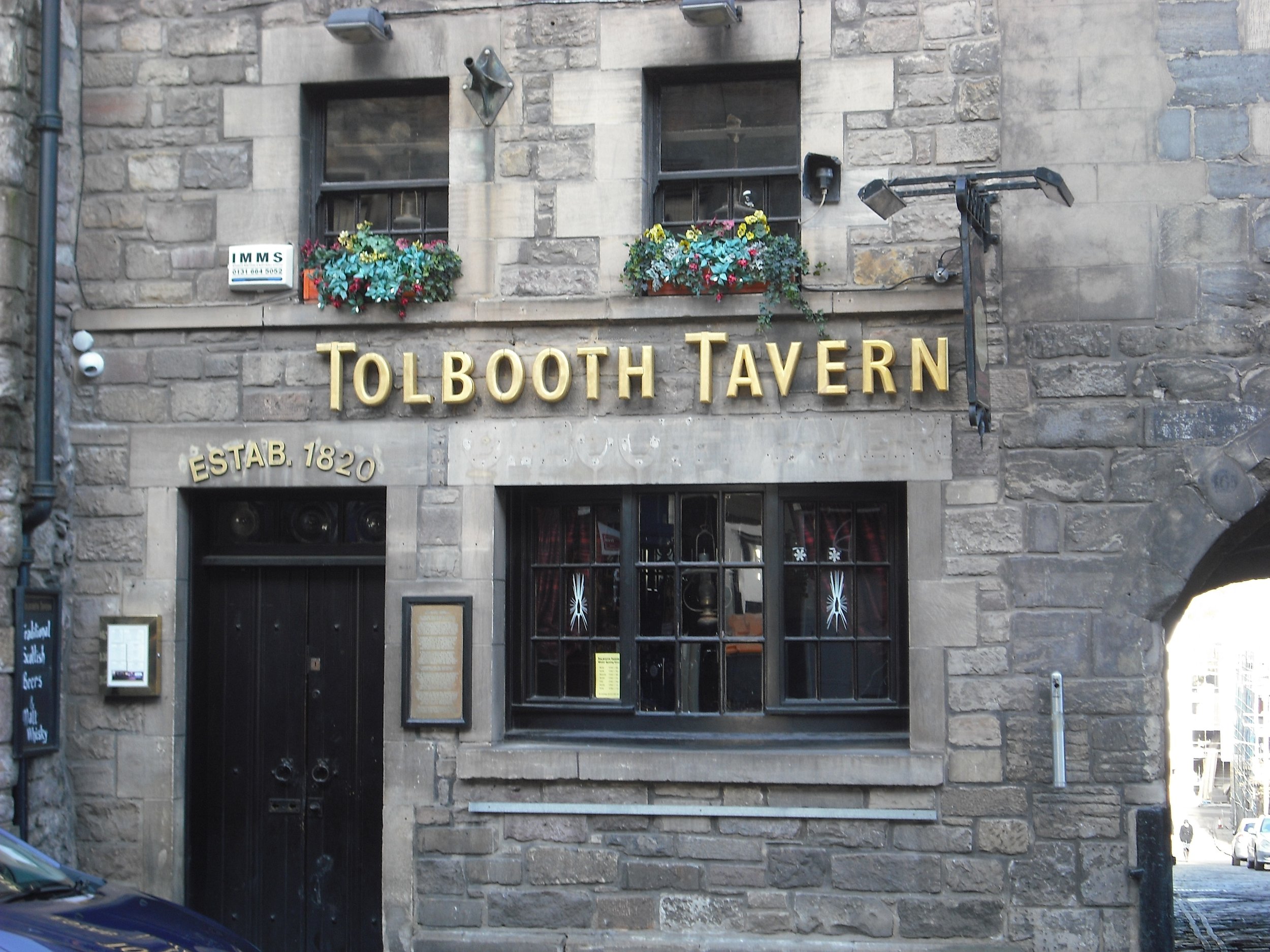
-
Interesting articles to read
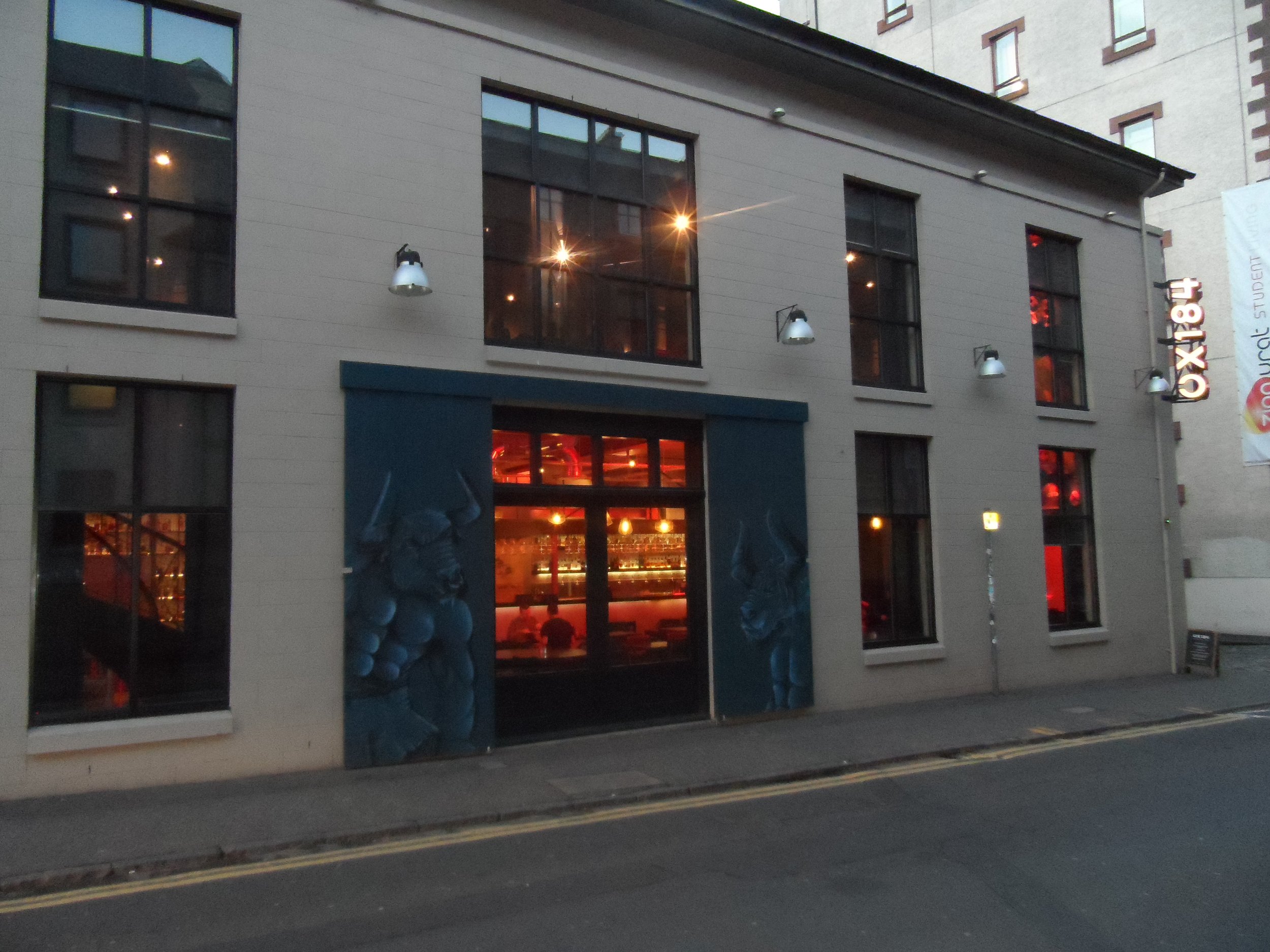
-
Who owns your beer?

-
Comparing pubs in Scotland with England
-

Books on Beer
A selection of recommended books covering all aspects of beer and brewing. There are books on the history of beer and others on different styles of beer.
For example
An Inebriated History of Britain by Peter Haydon
Amber, Gold & Black by Martyn Cornell
Brew Britannia by Jessica Boak & Ray Bailey
The Story of the Pint by Martyn Cornell
Miracle Brew by Pete Brown
Built to Brew by Lynn Pearson
And many more
-
CAMRA
The website of the Campaign for Real Ale
-
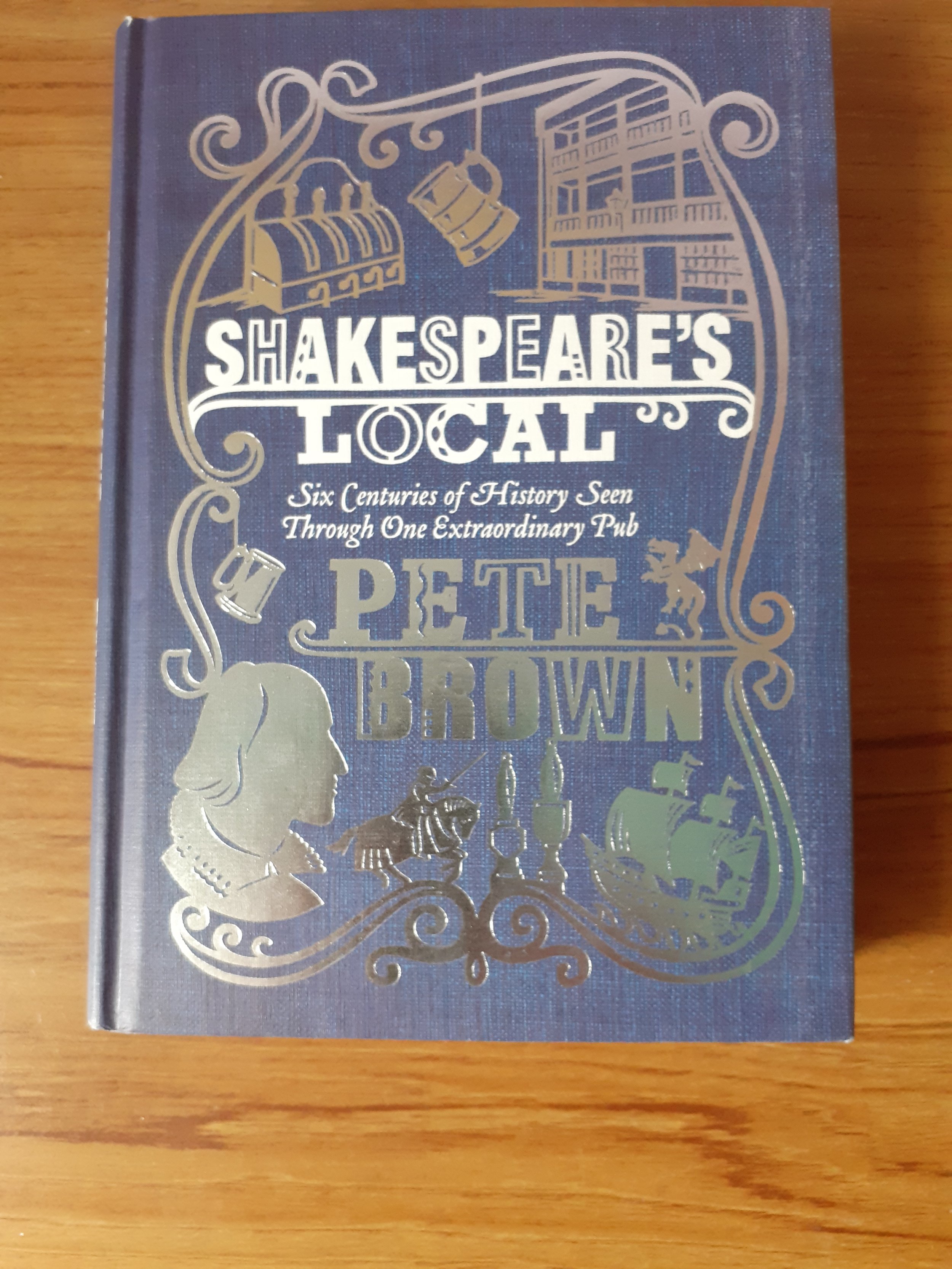
Books on Pubs
A selection of recommended books on pubs and their history. There are books on the social history of pubs and the design of pubs through the ages.
There are also books on visiting pubs and ones recommending pubs to visit.
CAMRA’s Good Beer Guide
Death of the English Pub by Christopher Hutt
Brewers, Brands and the Pubs in their Hands by Tony Thornton
Licensed to Sell by Brandwood, Davidson & Slaughter
And many more
“What contemptible scoundral stole the cork from my lunch ?.”
— W C Fields
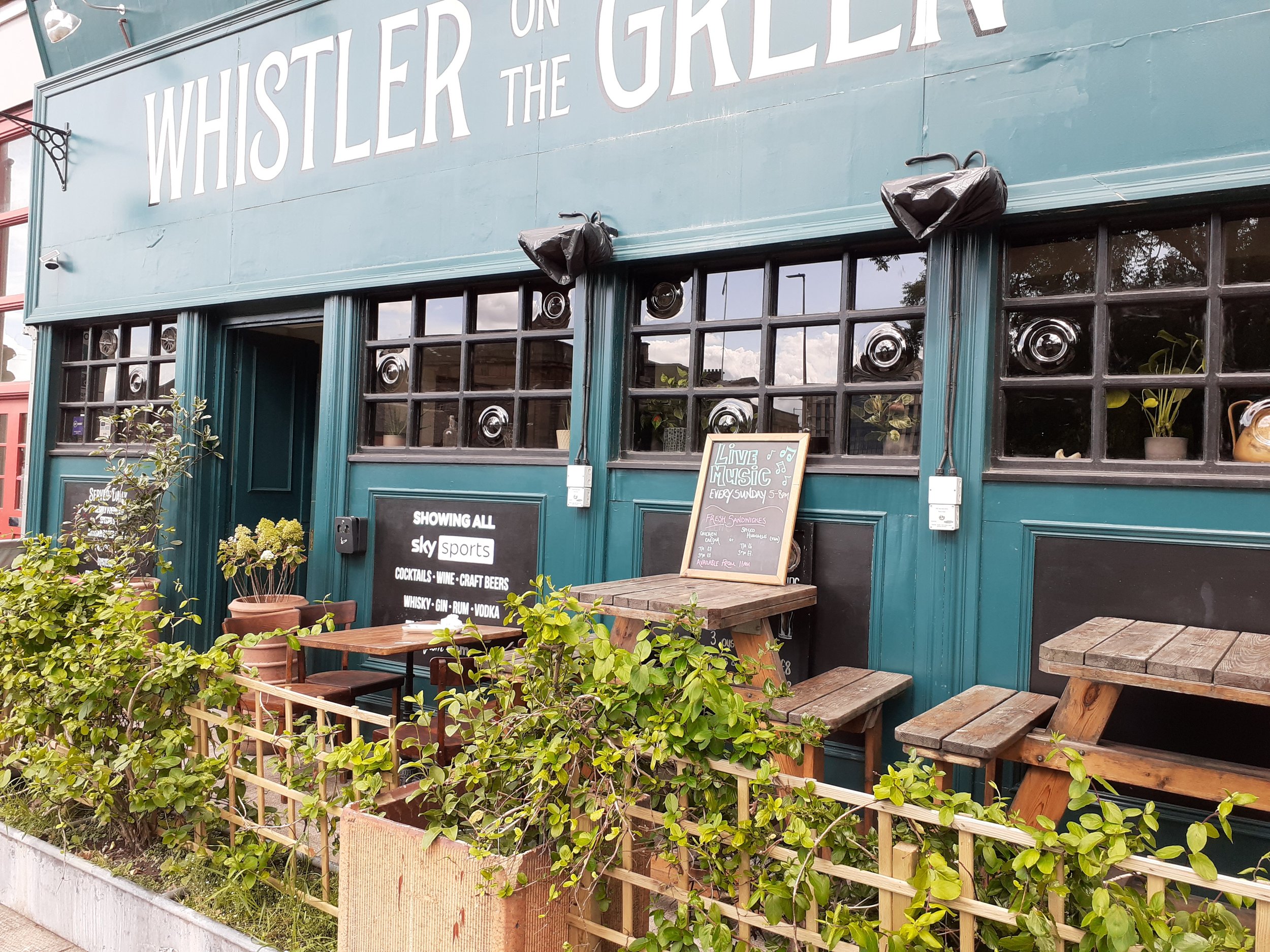
Answer: Dorothy L Sayers